 By Editorial Team
Key Takeaways
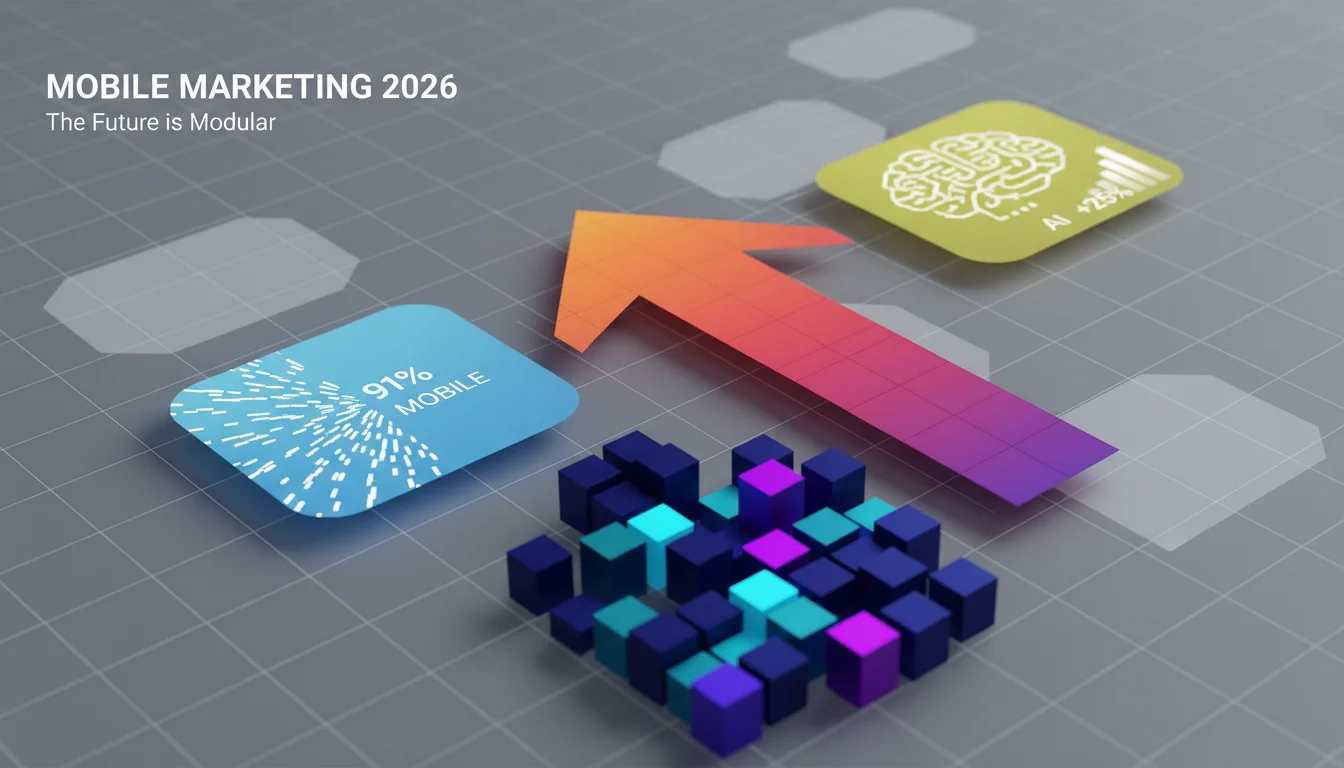
- Mobile-first isn’t optional anymore, since 91% of global internet users are on mobile devices. Your strategy must reflect this reality.
- Using AI for predictive analytics can bump mobile campaign conversion rates by 25% by finding the right users and showing them the right content.
- AI-driven content recommendations on mobile can lift user engagement by 30% over old-school, one-size-fits-all content.
- You have to optimize for voice search. With 55% of smartphone owners using it daily, especially for local queries, it’s a huge source of traffic.
- Marketers need to build AI into their mobile strategy, but they must also be transparent about data use and follow privacy laws to earn customer trust.
The fact that 91% of global internet users are now on mobile devices changes everything for businesses trying to reach them. That mobile saturation, combined with what artificial intelligence can now do, creates a completely new playbook for digital marketing. So what does that actually mean for your team and your budget today?
Mobile Dominance: 91% of Global Internet Users are Mobile-First
The massive scale of mobile internet use reflects a permanent change in how people behave online. A 2025 Statista report confirms it: 91% of the world’s internet users get online with a mobile phone. This isn’t a passing fad. It’s the standard. If your marketing isn’t built for mobile users from the ground up, you’re choosing to ignore almost your entire audience. Your website, emails, social content, and ads must all look perfect and work flawlessly on a smartphone. A desktop-first design that just shrinks down for mobile doesn’t work anymore. Mobile is the main screen now.
AI-Powered Personalization: A 25% Boost in Mobile Campaign Conversions
Putting artificial intelligence into your mobile marketing enables a kind of personalization we couldn’t do before. A HubSpot study found that AI-powered predictive analytics can lift mobile campaign conversion rates by as much as 25%. This is pure data science. AI algorithms sort through huge amounts of user data, behavior, preferences, past purchases, to predict which offer a specific person is most likely to act on. Think about a retail app. The AI learns a user looks at running shoes, usually shops for deals on Wednesdays, and prefers a certain brand. The app can then automatically change its homepage and send a push notification on Wednesday morning to feature a sale on that specific brand’s shoes. That kind of specific targeting is far more effective than blasting generic messages and actually feels helpful to the customer.
Voice Search Optimization: 55% of Smartphone Users Daily
Voice search is now a daily routine for a huge number of mobile users. Projections from eMarketer for 2025 indicate that 55% of people with a smartphone use voice search every day. This directly affects how you need to write your content and choose your keywords. People talk differently than they type. Voice searches are longer, more conversational, and often asked as full questions. A person won’t type “best Italian restaurant NYC”. They’ll ask, “Hey Siri, what’s the best Italian restaurant near me that’s open now?” To capture that traffic, you need to focus on natural language, long-tail keywords, and make sure your business info on Google Business Profile is completely accurate. For a local business, like a boutique on Ponce de Leon Avenue in Atlanta or a cafe in the West Village, having the correct address and hours is non-negotiable if you want to show up in those high-intent searches.
AI-Driven Content Creation and Optimization: 30% Higher Engagement
AI is also getting very good at helping create and optimize content for mobile. Some reports show that hyper-personalization powered by AI content recommendations can increase mobile engagement by 30%. This is about using AI to analyze which headlines, images, video lengths, and calls-to-action perform best with specific mobile audiences. For instance, AI can figure out that your younger customers on Instagram engage with short videos that have captions, while an older group prefers to get detailed blog posts through an email link. It can even pinpoint the best times to send push notifications by predicting when users are most active. This is a constant feedback loop: the AI makes recommendations, you implement them, and it learns from the new engagement data to get even smarter.
The Privacy Paradox: Building Trust in an AI-Powered Mobile World
A lot of marketers get this part wrong, assuming that with AI, more data is always better. While data is obviously the fuel, new privacy laws like GDPR and the California Consumer Privacy Act, plus growing suspicion from consumers, mean you can’t just collect everything. An IAB report from 2025 found that trust is now a key factor for consumers, and they will avoid companies with shady data practices. The job is to use AI for deep personalization *while* respecting user privacy. You have to be transparent about what data you’re collecting and why it benefits the user (like better recommendations), and give them easy ways to opt out. If people don’t trust your app with their data, your fancy AI-driven campaign won’t matter because it will never get the chance to convert them. Being clear and honest about data use is how you win. This isn’t just an adjustment. It’s a complete change in strategy, one that requires a real understanding of mobile users, smart use of AI, and a serious commitment to privacy.
What does “mobile-first” mean for marketing in 2026?
In 2026, mobile-first means you design everything, websites, emails, ads, content, for the smartphone screen from the start, because that’s where most people will see it. The desktop version becomes the adaptation, not the other way around.
How does AI actually improve mobile ad targeting?
AI improves mobile ad targeting by analyzing huge sets of user data (behavior, location, time of day) to predict who is ready to buy. It then delivers a personalized ad to that specific person, which makes the ad more relevant and much more likely to convert.
What are specific content changes for voice search?
For voice search, build out FAQ pages that directly answer common questions. Write in a natural, conversational tone and use longer, question-based keywords. Most importantly, make sure your business name, address, phone number, and hours are perfectly accurate on Google Business Profile.
Is it possible to use AI for personalization and still respect user privacy?
Yes, but you have to be deliberate about it. This means being transparent in your privacy policy about what data you collect and how it’s used to improve their experience. You must also provide clear, easy-to-find opt-out controls for users who want them.
What’s a good first step to integrate AI into a mobile strategy?
A good, practical first step is to use an AI-powered analytics tool. It can analyze your existing mobile user data and reveal patterns in behavior and opportunities for personalization that you’re likely missing with standard analytics platforms.


