 By Editorial Team
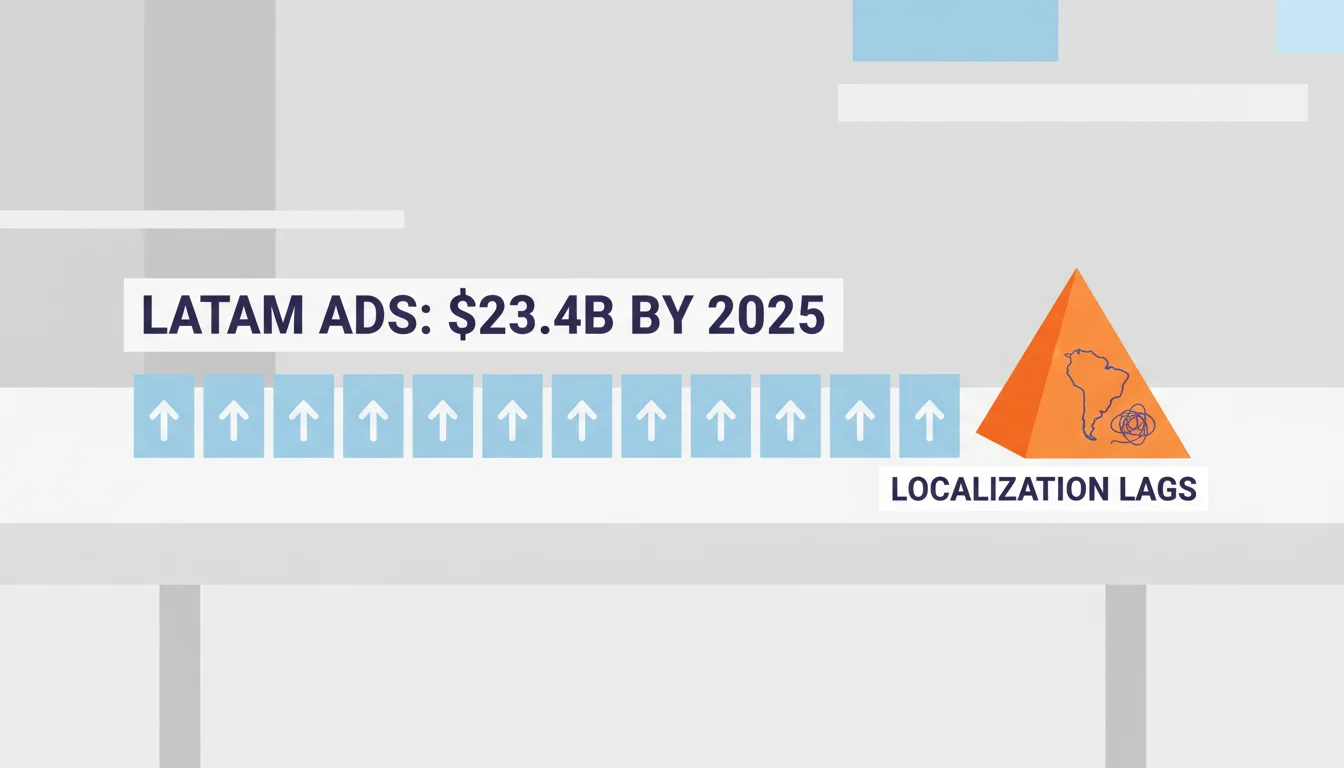
Digital ad spending in Latin America is set to hit $23.4 billion by 2025, according to eMarketer, yet I see so many marketers burning through their budgets with outdated assumptions about the region. They’re getting clicks but no sales, and it’s because their entire approach is wrong, leading to campaigns that badly miss their targets. The real question is, what does it actually take to get these campaigns to convert?
Key Takeaways
- A full 70% of LATAM consumers want ads in their native language, and ignoring local dialects is a fast way to kill ad relevance and conversion rates.
- With over 80% of the region’s digital ad budget going to mobile, your creative and targeting must be built for phones from the very start.
- You absolutely need local payment options like Pix in Brazil or OXXO in Mexico. Credit card usage isn’t nearly as common as in North America.
- Stop segmenting by country. Cultural differences inside a single market, like between Mexico City and rural areas, will make or break your campaign’s performance.
- Campaigns need the flexibility to react to sudden economic shifts and local holidays, which can change consumer spending power overnight.
LATAM’s Digital Ad Spend Surges: $23.4 Billion by 2025, Yet Localization Lags
Yes, the LATAM digital ad market is booming, eMarketer predicts it’ll hit $23.4 billion by 2025. But that number hides an ugly truth I see every day in campaign data: a huge chunk of that money is just wasted. Brands throw budget at the region with a lazy, one-size-fits-all strategy, treating it like a single country. They think a quick translation of their US ad copy is enough. You have to rebuild the entire user journey, from the ad creative all the way to the checkout, for each specific culture you’re trying to reach.
The digital field itself is completely different from country to country. You have advanced markets like Brazil and Mexico, but then you have places like Peru or Ecuador where people use the internet and social media differently. Using the same strategy everywhere just burns impressions. The most common symptom I see is a campaign with a great click-through rate (CTR) that completely falls apart at the conversion stage. People click, land on a page that feels alien or doesn’t work right for them, and they bounce immediately. This is a fundamental breakdown in strategy, not something you can fix with a small bid adjustment.
70% of Consumers Demand Native Language Engagement: Beyond Simple Translation
A full 70% of Latin American consumers say they prefer brands that speak to them in their native language, and that means far more than just running your English copy through a translator for Spanish or Portuguese. You have to get the local flavor right. The Spanish used in a Mexico City ad would sound completely wrong, maybe even robotic or stilted, to someone in Buenos Aires because the vocabulary and tone are so different. Relying on automated tools is a recipe for copy that feels off and instantly erodes trust with your potential customer.
I’ve seen so many campaigns where a single ‘pan-LATAM’ Spanish ad is run everywhere from Colombia to Chile, and the results are a mess. It might do okay in one country but get ignored or even laughed at in another for using the wrong slang. What a complete waste of money. Using the right local dialect shows you respect the customer and you’ve done your homework which is how you build a real connection. You have to budget for native-speaking copywriters and local consultants. There’s no way around it if you want your ads to actually work.
Mobile Dominance: Over 80% of Digital Ad Budgets Go to Mobile
According to the IAB’s 2026 Mobile Ad Spend Report for Latin America, over 80% of digital ad budgets in LATAM go to mobile. This is the default reality. Any desktop-first strategy is doomed from the start and actively hurts your performance. Thinking mobile-first means you have to account for the entire experience on a small screen, which includes everything from shorter attention spans and the high cost of mobile data for many users to the dominance of social apps as the primary way people are online.
Your creative team needs to be producing vertical video, touch-friendly interactive ads, and landing pages that load instantly. These aren’t nice-to-haves, they’re table stakes. A huge number of people are on prepaid data plans and will not wait for a heavy, slow-loading page to finish, they’ll just bounce to save their data. I always tell my clients to build for the worst-case scenario: a cheap Android phone on a spotty 3G connection. If your site works well for that user, it’ll work for everyone. You’ll reach the whole market, not just the wealthy segment with iPhones and unlimited data plans.
Payment Method Diversity: The Case for Pix and OXXO
Assuming everyone in Latin America will pay with a credit card is one of the most expensive mistakes you can make in a cross-border PPC campaign. Credit card usage is much lower than in North America, and local payment options are dominant. A 2025 Nielsen report on payment trends points to the massive adoption of Pix in Brazil, it’s a real-time payment system that’s everywhere now. In Mexico, millions of people use OXXO, paying cash at a local convenience store to complete an online purchase.
If you don’t have these local payment options on your checkout page, you’re killing your conversion rate. It’s that simple. You’ve paid for the click, the user is ready to buy, and then they hit a wall because they can’t pay the way they want to. I see it constantly in analytics: a huge drop-off right at the payment step. You have to get your tech team and payment providers to integrate these methods. This gives you access to a massive part of the market that simply doesn’t use credit cards for online shopping, and you’re just throwing away sales if you ignore them.
Debunking the “One-Size-Fits-All” Audience Myth
Another huge mistake is thinking you can target ‘LATAM’ with one broad audience segment. That’s just lazy. The region’s diversity isn’t just country-to-country. It’s city-to-city. The consumer culture in Buenos Aires has almost nothing in common with the more traditional northern provinces of Argentina. The same goes for Peru, with its mix of modern urban centers and distinct indigenous communities, all with their own buying habits.
The campaigns that actually work are the ones that get granular with audience segmentation, targeting down to the city level. Instead of a vague ‘LATAM millennials’ audience, you need to be building campaigns for ‘young professionals in São Paulo’ or ‘families in Medellín who like hiking.’ You can find these audiences by digging into Google Ads’ insights and Meta’s detailed targeting options (check the Meta Business Help Center for how-tos). Forget the old idea that broader reach is always better. In LATAM, it just means you’re showing a weak message to a lot of the wrong people. It’s more work to manage dozens of small, hyper-local campaigns, but it’s the only way to get a decent return on your spend.
The bottom line for cross-border PPC in LATAM is that you can’t fake it. You have to commit to real localization, which means getting the language, mobile experience, and payment options right for each market. It’s how you maximize experiential marketing ROI and avoid just burning cash. Look at a company like Enel Chile, they show what’s possible when you actually crack the local PPC code.
Why is simple translation insufficient for LATAM PPC campaigns?
It ignores critical regional dialects, slang, and cultural context. Ad copy can sound robotic or even offensive, failing to connect with local buyers and in the end destroying trust.
What role does mobile play in LATAM digital advertising?
It’s the main way people access the internet, getting over 80% of digital ad budgets. Your campaigns must be built for mobile-first creative, fast load times, and touch-based interactions.
Which local payment methods are important for cross-border e-commerce in LATAM?
Methods like Pix in Brazil and OXXO in Mexico are essential. Credit card use isn’t as widespread as in other regions, so many customers depend on these local systems for online shopping.
How should advertisers approach audience targeting in Latin America?
Avoid broad, one-size-fits-all segments. You need to get granular, often targeting by city or specific region, to address the huge cultural and economic differences that exist even within a single country.
What is a common mistake advertisers make when entering the LATAM market?
Treating Latin America like one giant, single market. This leads them to use generic strategies that ignore the vast linguistic, cultural, and economic differences between and within each country.


