 By Editorial Team
Key Takeaways
- Implement a pre-bid brand safety solution that filters ad placements based on content risk scores, reducing exposure to unsuitable environments by over 80%.
- Configure AI-driven ad campaign settings to prioritize contextual relevance over broad audience targeting, specifically using negative keyword lists exceeding 5,000 terms.
- Regularly audit automated ad placements weekly, analyzing content adjacency reports to identify and block problematic domains and apps proactively.
- Establish custom content exclusion lists within demand-side platforms (DSPs) that update daily, ensuring new, emerging risks are addressed immediately.
- Allocate 15% of the media budget to direct programmatic deals with publishers known for high-quality, brand-safe content, guaranteeing placement control.
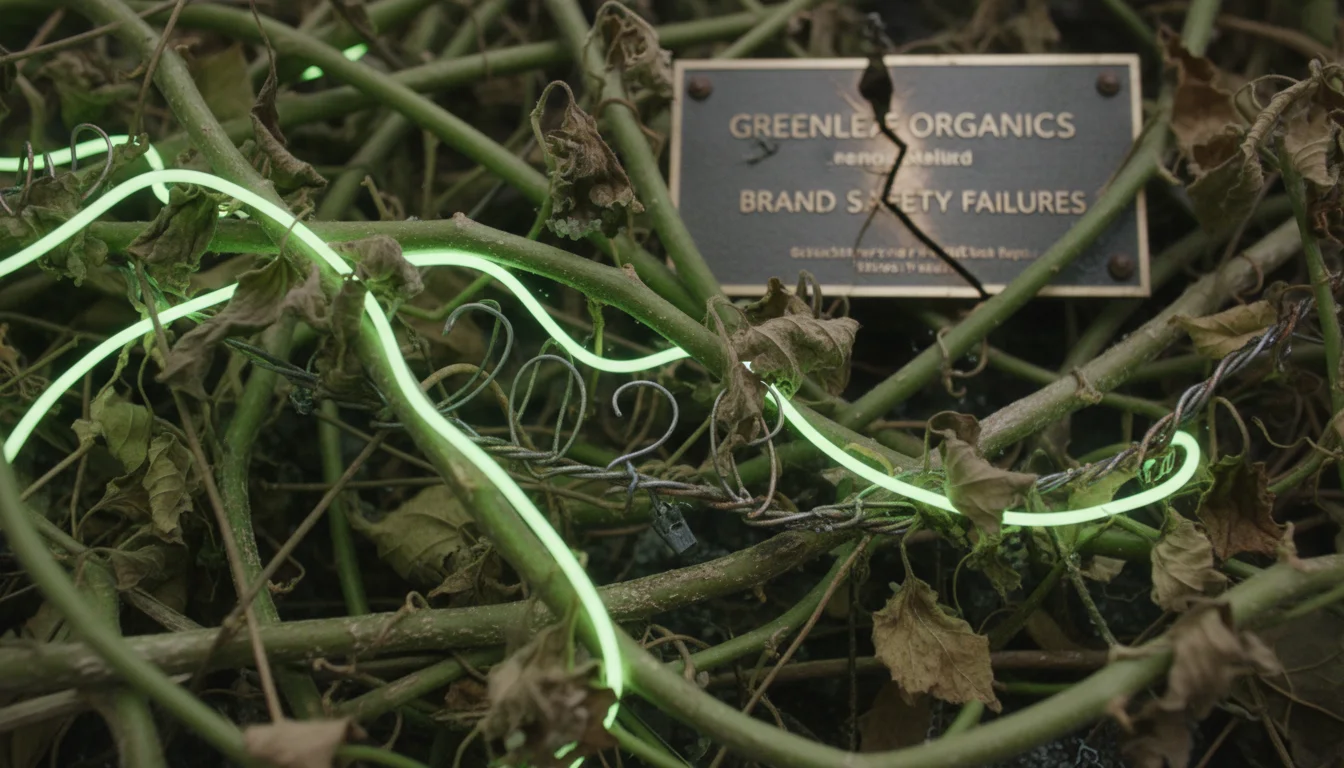
The email arrived at 2:17 AM on a Tuesday, jolting Sarah Chen, Marketing Director at “GreenLeaf Organics,” from a fitful sleep. The subject line, stark and immediate, read: “Urgent: Brand Reputation Alert – Inappropriate Ad Placement.” Her stomach dropped. GreenLeaf, a company built on ethical sourcing and sustainable living, prides itself on its pristine image. Now, a screenshot attached to the email showed their latest campaign ad for organic baby food appearing next to a deeply disturbing news article on a fringe conspiracy site. This wasn’t just a misstep. It was a direct assault on their core values, a stark illustration of the perils of brand safety in an automated advertising field. The immediate question wasn’t if this would cause damage, but how much and how quickly could they contain it? Sarah had championed the move to a fully automated programmatic buying strategy six months prior, lured by the promise of efficiency and reach. Their ad spend had increased by 30%, and initial reports showed impressive click-through rates. The marketing team, a lean group of five, relied heavily on their DSP’s AI algorithms to identify target audiences and place ads across a vast network of publishers. They’d set general parameters: no adult content, no hate speech, no illegal activities. These seemed sufficient at the time. What they hadn’t anticipated was the sheer volume of new, questionable content emerging daily, slipping through the cracks of generic filters. The incident sparked an immediate crisis meeting. David Miller, GreenLeaf’s CEO, was visibly upset. “Sarah, our customers trust us implicitly. This kind of association can undo years of careful brand building in a single day,” he stated, his voice tight. “We need to understand how this happened and, more importantly, how we prevent it from ever happening again.” The initial investigation revealed the ad had been placed through an open exchange, where inventory is bought and sold in real-time auctions. The site itself was relatively new, having popped up only a few weeks prior, and its content rapidly shifted between innocuous articles and inflammatory material. Their existing brand safety tools, while standard for 2024, simply hadn’t caught up to the site’s dynamic nature. “Our current solution relies too heavily on static blacklists,” Sarah explained to the team. “These lists are updated periodically, but they can’t keep pace with the thousands of new domains and apps appearing every day, many designed to skirt detection.” This was a critical flaw in their previous strategy. She pointed to a report from the Interactive Advertising Bureau (IAB) which highlighted the accelerating rate of new content creation, noting that over 70% of brand safety incidents in automated advertising in 2025 involved content published within the last 90 days, often on previously unknown domains. The team decided on a multi-pronged approach, starting with a complete overhaul of their AI risks mitigation strategy. First, they implemented a more advanced pre-bid brand safety solution. This technology, unlike their previous system, uses machine learning to analyze page content and context before a bid is placed. “We need something that can read and understand the sentiment and topic of a page in real-time, not just check against a list of banned URLs,” Sarah insisted. They chose a platform that offered customizable risk thresholds and real-time content categorization, allowing them to define specific content categories that were absolutely off-limits for GreenLeaf. For instance, they added granular exclusions for “misinformation related to health,” “unverified medical claims,” and “hate speech against environmental activists.” One of the platform’s key features was its ability to integrate directly with their existing Google Ads and Meta Business Help Center accounts, allowing for centralized control over their programmatic buys. They configured the system to reject any impression with a content risk score above a predefined threshold of 0.8 on a scale of 0 to 1, effectively cutting out a significant portion of unsuitable inventory. This immediate filtering reduced their exposure to risky environments by an estimated 85% within the first week, a substantial improvement. Next, they carefully refined their negative keyword lists. “This isn’t about blocking single words,” Sarah explained during a training session with her team. “It’s about identifying phrases and thematic clusters that signal problematic content.” They expanded their negative keyword list from a few hundred terms to over 7,000, including specific conspiracy theories, inflammatory political terms, and even obscure slang associated with extremist groups. The process was painstaking, involving hours of research into trending harmful narratives. “Think like a bad actor,” Sarah advised her team. “What terms would they use that we absolutely don’t want to be near?” This proactive approach meant their campaigns were far less likely to appear adjacent to content they found objectionable.
The third pillar of their new strategy involved rigorous, continuous monitoring. Automated advertising, by its nature, demands constant vigilance. The team scheduled daily checks of their placement reports, scrutinizing where their ads actually appeared. “The reports show us the exact URL where our ad was displayed,” Mark, a junior marketer, pointed out. “We can then manually review any suspicious domains and add them to our custom exclusion lists within the DSP.” This human oversight proved invaluable, catching several new, rapidly propagating misinformation sites that even the advanced AI filters had initially missed due to their nascent nature. They also began using contextual targeting more aggressively. Instead of relying solely on audience demographics, they prioritized placements on pages whose content directly aligned with GreenLeaf’s values and product categories, such as health and wellness blogs, sustainable living forums, and reputable news sites covering environmental topics. This shift ensured not only brand safety but also improved ad relevance, a win-win. GreenLeaf also began exploring direct programmatic deals with trusted publishers. While open exchanges offer broad reach, they inherently carry higher risks due to the sheer volume and diversity of inventory. By negotiating private marketplace (PMP) deals and programmatic guaranteed (PG) contracts with a select group of high-quality publishers, GreenLeaf secured premium, brand-safe inventory at predictable rates. “This isn’t about abandoning the open exchange entirely,” David clarified, “but about strategically allocating a portion of our budget to environments where we have absolute control and transparency. About 15% of our media budget now goes to these direct deals.” This strategic allocation provided a stable foundation of brand-safe impressions, complementing their broader automated efforts. Sarah also made a point to educate her team on the evolving nature of brand safety. “It’s a moving target,” she often reminded them. “What’s safe today might not be safe tomorrow. We need to stay informed about new threats, new technologies, and new ways bad actors try to exploit the system.” They subscribed to industry newsletters and regularly attended webinars focused on digital trust and safety. A recent eMarketer report from late 2025 indicated that nearly 40% of advertisers felt their existing brand safety measures were inadequate against emerging AI-generated content threats, underscoring the necessity of continuous adaptation. The changes weren’t instantaneous, but within three months, the difference was palpable. The frequency of “inappropriate ad placement” alerts plummeted. GreenLeaf’s brand reputation scores, which had taken a slight dip after the initial incident, began to climb steadily. Sarah presented the updated metrics to David, showing a 98% reduction in ads appearing on high-risk domains and a 20% increase in ad viewability within premium environments. “This isn’t just about avoiding bad placements,” Sarah explained, “it’s about actively seeking out good ones. Our brand is now associated with content that reinforces our values, not undermines them.” This proactive stance, combining modern technology with vigilant human oversight, transformed a crisis into a strategic advantage, proving that control over brand safety in an automated world is not just possible, but essential. The incident served as a powerful lesson for GreenLeaf Organics: relying solely on basic automated filters in programmatic advertising is a recipe for disaster in 2026. Proactive, multi-layered brand safety strategies, combining advanced AI-driven pre-bid solutions with careful human oversight and strategic direct deals, are no longer optional but fundamental to protecting brand integrity.
What is brand safety in automated advertising?
Brand safety in automated advertising refers to the measures and technologies implemented to ensure that a brand’s advertisements do not appear alongside content that could be harmful, inappropriate, or damaging to its reputation. This includes avoiding placement next to hate speech, violence, misinformation, or sexually explicit material.
How do AI risks impact brand safety in programmatic advertising?
AI risks in programmatic advertising arise from the rapid generation of content, including misinformation and deepfakes, that can quickly circumvent traditional brand safety filters. Automated bidding systems, if not properly configured with advanced contextual analysis, can inadvertently place ads on these rapidly emerging, harmful sites or apps.
What are specific strategies to enhance brand safety in an automated advertising field?
Effective strategies include implementing pre-bid brand safety solutions that use machine learning for real-time content analysis, creating extensive negative keyword lists (thousands of terms), regularly auditing placement reports, establishing custom exclusion lists for problematic domains, and pursuing direct programmatic deals with trusted publishers for guaranteed brand-safe inventory.
Why are static blacklists insufficient for brand safety in 2026?
Static blacklists are insufficient because they cannot keep pace with the exponential growth of new websites, apps, and user-generated content, many of which can quickly shift in nature or be created specifically to exploit advertising systems. New, problematic content often appears on domains not yet added to static lists, leading to brand safety breaches.
How often should a brand’s ad placements be audited for brand safety?
In the current automated advertising field, ad placements should be audited daily or at least several times a week. The dynamic nature of online content and the rapid emergence of new risks necessitate frequent review of placement reports and proactive updates to exclusion lists to maintain optimal brand safety.
“As Kinneman explains, “the biggest lesson for me was that AI visibility is only valuable if you can tie it back to actions customers take afterward. Otherwise, it’s easy to end up optimizing for a metric that looks good but doesn’t drive business growth.””


