 By Editorial Team
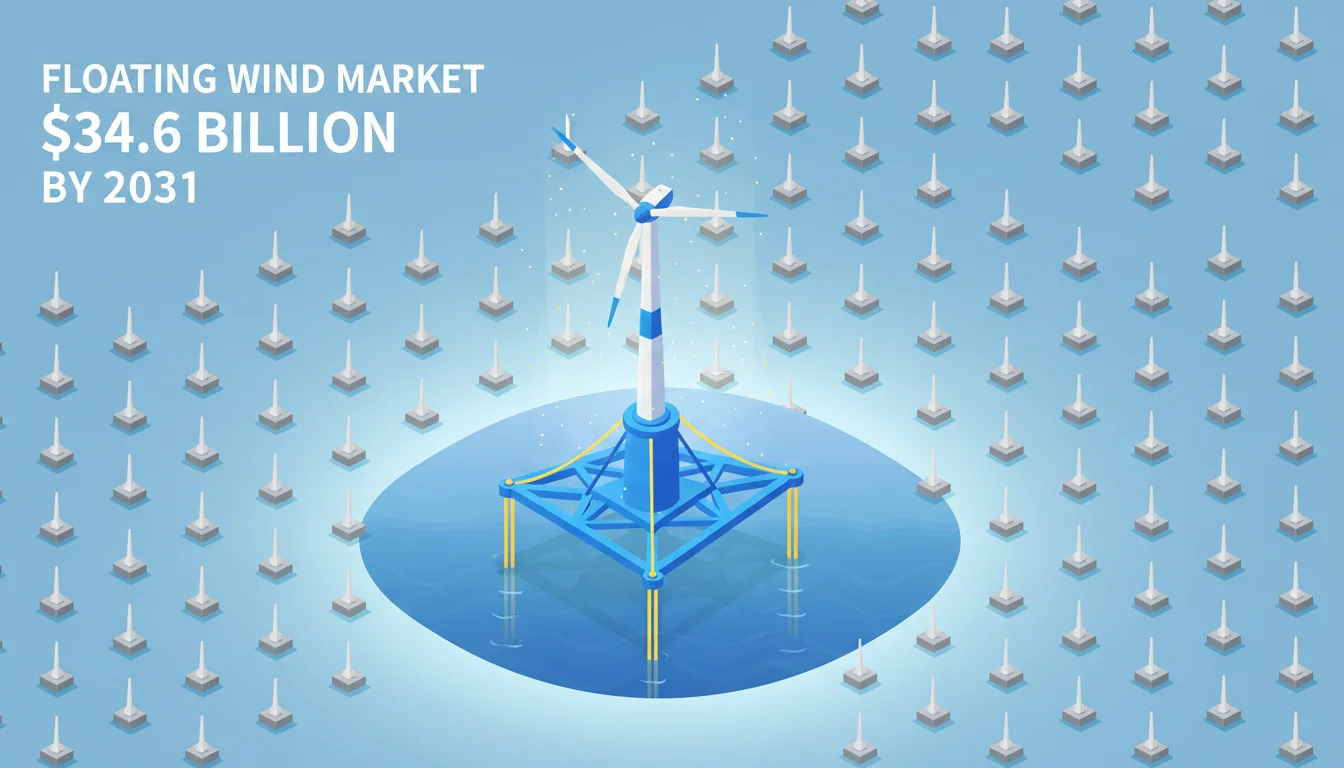
That $34.6 billion figure for the floating offshore wind market by 2031 isn’t just a big number from Allied Market Research, it’s a starting gun. With a 43.1% compound annual growth rate, the market’s going to get crowded fast. This presents a serious opportunity, but only for businesses that figure out how to use sophisticated niche PPC strategies to reach an incredibly specific, high-value audience. How do you actually get in front of the engineers and investors in a brand-new energy market?
Key Takeaways
- Stop targeting with broad industry terms. To succeed in floating offshore wind PPC, you have to segment your campaigns by company size, the prospect’s investment stage, and their specific interest in different technologies.
- Put at least 30% of your starting PPC budget into LinkedIn Ads and specialized programmatic platforms. That’s where you’ll reach the decision-makers directly, not on generic search.
- Your geo-targeting needs to be sharp enough to hit specific port cities and industrial hubs like Aberdeen, Scotland, or Nantes, France, where the real-world wind farm development and manufacturing is actually happening.
- You need to build out different ad copy and landing pages for each phase of a project’s life, from early-stage feasibility studies to later-stage operational maintenance, which can boost your conversion rates by up to 20%.
- Hunt for long-tail keywords that talk about specific engineering problems or regulatory hurdles, because a person searching for those terms has high purchase intent and a real budget.
Projected Market Value: $34.6 Billion by 2031
The $34.6 billion market value projected by Allied Market Research tells me one thing: investor confidence is solid and the tech is proven. For a PPC manager, that’s a clear signal to get precise. If you run a generic Google Search campaign for “offshore wind,” you’ll just burn through your budget with nothing to show for it. I’ve seen it happen. You have to go where these high-value people are doing their work, which means platforms like LinkedIn Ads become your primary tool. You should be running campaigns segmented by very specific job titles (“Director of Renewable Energy Investments” or “Head of Offshore Wind Development”) and filtering for companies with over 500 employees. The cost per click is going to be high, I won’t lie, but the value of a conversion is astronomical. A single good lead from this sector can easily be worth millions in contract revenue.
“Marketing automation has two fundamentally different jobs. One is technical: building journey logic, setting up workflows, defining enrollment criteria, creating segmentation, and configuring tracking.”
Floating Wind Capacity Set to Exceed 20 GW by 2030
GlobalData’s forecast of over 20 gigawatts (GW) of capacity by 2030 is more than a metric, it’s a project timeline for your PPC strategy. A company that’s evaluating sites for a 500 MW floating wind farm in 2026 has completely different questions and needs than a company looking for operations and maintenance partners in 2030. Your campaigns have to be split to reflect these distinct stages. For the early development phase, your keywords should be things like “floating wind feasibility studies,” “site assessment for offshore wind,” or “permitting for floating wind farms.” Later on, you’ll want campaigns targeting “offshore wind turbine maintenance contracts” or “subsea cable inspection floating wind.” I’ve had clients see a conversion rate improvement of 15% to 20% just by tailoring their ad copy and landing pages this precisely to match where the prospect is in their buying process. It’s about having the answer ready the moment they realize they have a specific problem.
Regional Hotspots: Europe Leading, Asia-Pacific Emerging
The same GlobalData report shows Europe, especially the UK, Norway, and France, is where the action is right now. But Asia-Pacific, with Japan and South Korea, is coming up fast. This geography is the blueprint for your geo-targeting. Don’t just target “Europe.” You have to drill down. Why not run ads that only show up around Aberdeen, knowing its deep history in offshore energy infrastructure? For France, you should be focusing on Brittany or Occitanie, where the projects are concentrated. For Asia-Pacific, it makes sense to run campaigns targeted specifically to Busan, South Korea, or the Fukushima prefecture in Japan. This isn’t just about spending money more efficiently, it’s about being relevant. An ad talking about EU regulations is useless to an engineer in Japan. And spend the small amount of extra money on language localization. Running ads and landing pages in French, Norwegian, or Korean shows you’re serious and builds trust that pays back in qualified leads.
Technology Trends: From Semi-Submersibles to Spar Buoys
Floating offshore wind isn’t a single technology. As a 2024 IEA analysis shows, the field is diversifying into different platform designs like semi-submersibles, spar buoys, and tension leg platforms, each with its own supply chain and engineering headaches. This technical detail is a goldmine for niche PPC keyword targeting. You shouldn’t be bidding on “floating wind platforms.” You should be bidding on “semi-submersible wind turbine design,” “spar buoy mooring solutions,” or “tension leg platform installation.” The companies that make or service these specific parts are searching for those exact terms. This is where long-tail keywords really prove their worth. The search volume is low, sure, but the user’s intent is sky-high. What’s a more valuable click: someone searching “wind energy,” or someone searching “corrosion protection for floating spar buoys”? I always advise clients to build out separate, highly specific ad groups for each platform type, writing ad copy that speaks to the exact challenges of that technology. It’s more work upfront but it pays off in lead quality.
The Conventional Wisdom is Wrong: Broad Branding is a Waste
I often hear marketing managers say that for a new market, you have to start with broad brand awareness. I couldn’t disagree more. In the floating offshore wind industry, your audience is already highly educated and actively looking for very specific solutions to very expensive problems. These are not casual consumers, they are project managers, specialist engineers, and investors with nine-figure budgets. Dumping money into generic display ads or feel-good social media campaigns is an absolute waste of your budget. You should be spending that money on hyper-targeted LinkedIn and search campaigns that capture people who are already deep in their buying cycle. This is about demand capture, not demand generation, especially when you have to justify your ROI on every dollar. The truth is, the decision-makers in this field are bombarded with information. They’ve trained themselves to ignore anything that isn’t directly related to the fire they’re trying to put out today. Your PPC ad needs to be the fire extinguisher.
The story of the floating offshore wind market is one of precision. For PPC advertisers, winning depends on a deep understanding of the industry’s technology, its key regions, and the exact needs of its powerful stakeholders. By getting granular with your targeting, messaging, and platform choices, you can grab the attention and the business of this fast-growing sector.
What are the most effective PPC platforms for reaching the floating offshore wind market?
LinkedIn Ads is your best bet for reaching the actual decision-makers and engineers, since you can target by job title, company, and industry. Google Search Ads are also essential for capturing high-intent searches when someone is actively looking for a specific technology or service provider.
How should I structure my keywords for niche PPC in this industry?
You need to use long-tail keywords that reflect real-world technical problems, project stages, or specific locations. Think “semi-submersible platform design,” “offshore wind farm permitting UK,” or “subsea cable installation for floating wind.” Stay away from vague terms like “renewable energy.”
Should I use broad or exact match keywords for floating offshore wind PPC?
In a market this specialized, you should heavily favor exact match and phrase match keywords. This ensures your ads are only shown to the most relevant people. Broad match is dangerous here and will waste money unless you pair it with a massive list of negative keywords.
What kind of landing page content performs best for this niche?
Your landing pages need to be heavy on technical details. Give them data sheets, case studies, whitepapers, and clear CTAs for a technical consultation. The page must be a direct answer to the ad they clicked, offering a solution to a specific engineering or financial problem. Skip the marketing fluff.
How important is geo-targeting in floating offshore wind PPC campaigns?
Geo-targeting is absolutely critical. Your campaigns must be aimed at specific countries, regions, and even the port cities or industrial zones where development is concentrated. Targeting a place like Aberdeen, Scotland, or the coast of Brittany, France, will always be more effective than a generic country-level campaign.


