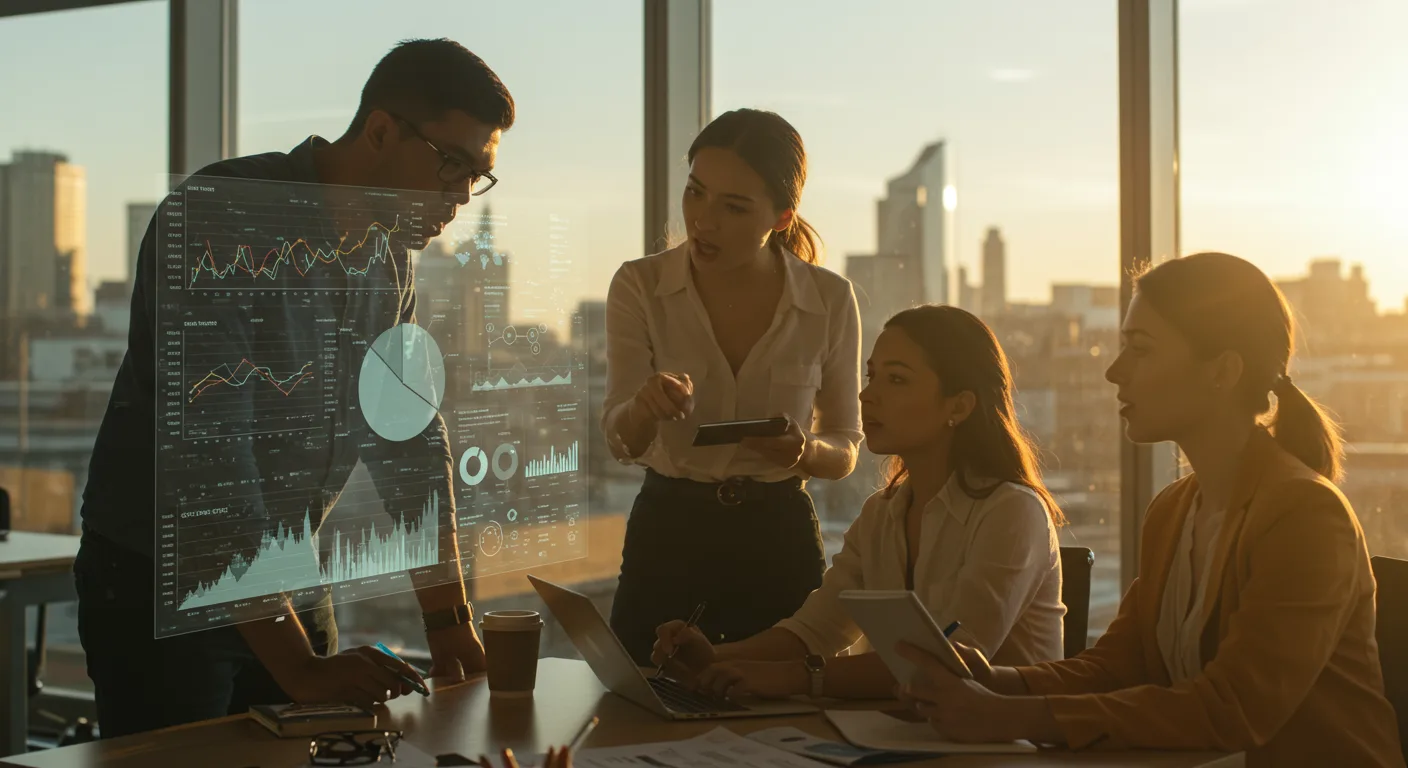
The Future of Expert Insights: Key Predictions
The world of marketing is in constant flux, and staying ahead requires more than just keeping up with the latest trends. It demands a deep understanding of underlying shifts and the ability to anticipate future needs. Expert insights are the key to unlocking this foresight, but how will these insights be gathered, interpreted, and utilized in the years to come? Are we ready for the next evolution in leveraging expert knowledge?
1. AI-Powered Curation of Expert Opinions
The sheer volume of information available online is overwhelming. Sifting through countless articles, reports, and social media posts to find relevant expert opinions is a time-consuming and often fruitless endeavor. In the future, we’ll see a significant rise in AI-powered curation tools that can intelligently identify, aggregate, and summarize insights from various sources.
These tools will go beyond simple keyword searches. They’ll use natural language processing (NLP) to understand the nuances of language, identify the sentiment behind opinions, and assess the credibility of sources. Imagine a platform that not only finds articles about a specific marketing strategy but also analyzes the authors’ expertise, the methodology used in their research, and the overall consensus among other experts in the field.
HubSpot, for example, could integrate such a feature into its platform, allowing marketers to quickly access a curated summary of expert opinions on any topic relevant to their campaigns. This would save time, improve decision-making, and ultimately lead to more effective marketing strategies. The ability to filter by industry, company size, and specific marketing channels will further refine the results.
From my experience consulting with marketing teams, the biggest challenge is not finding information, but verifying its quality and relevance. AI-powered curation addresses this directly by providing a more efficient and reliable way to access expert insights.
2. Hyper-Personalized Expert Recommendations
Generic advice is rarely effective. What works for one company may not work for another, and what works in one industry may not work in another. The future of expert recommendations is hyper-personalization.
We’ll see a shift from broad, general advice to highly tailored recommendations based on a company’s specific needs, goals, and resources. This will be driven by AI algorithms that can analyze vast amounts of data to identify patterns and predict outcomes. These algorithms will consider factors such as a company’s industry, size, target audience, marketing budget, and past performance to generate personalized recommendations for marketing strategies, tactics, and tools.
For instance, if a small e-commerce business is struggling to increase its website traffic, an AI-powered platform might recommend a specific combination of SEO techniques, social media marketing strategies, and paid advertising campaigns, all tailored to the business’s unique circumstances. Shopify could leverage this by integrating AI-driven consulting directly into their platform.
3. The Rise of Micro-Influencer Networks
The traditional influencer marketing model, with its focus on celebrities and large-scale influencers, is becoming less effective. Consumers are increasingly skeptical of endorsements from individuals who are perceived as being out of touch with their everyday lives. The future of influencer marketing lies in micro-influencer networks.
These networks consist of individuals with smaller, more engaged audiences who are seen as authentic and trustworthy. They often have deep expertise in a specific niche and are passionate about sharing their knowledge with their followers. Working with micro-influencers allows marketers to reach a highly targeted audience with a message that resonates with them on a personal level.
Platforms like Instagram and TikTok will become even more crucial for building these networks, with brands actively seeking out and partnering with micro-influencers who align with their values and target audience. The key will be authenticity and transparency, ensuring that the partnerships are genuine and that the influencers are truly passionate about the products or services they are promoting.
4. Predictive Analytics for Marketing Campaign Optimization
Data is the lifeblood of modern marketing. But simply collecting data is not enough. Marketers need to be able to analyze data and use it to make informed decisions. The future of marketing campaign optimization lies in predictive analytics.
Predictive analytics uses statistical algorithms and machine learning techniques to forecast future outcomes based on historical data. This allows marketers to anticipate trends, identify potential problems, and optimize their campaigns in real-time. For example, predictive analytics can be used to forecast the ROI of a marketing campaign, identify the most effective channels for reaching a target audience, and predict which customers are most likely to convert.
Google Analytics is already incorporating predictive features, and we can expect to see even more sophisticated tools emerge in the coming years. These tools will empower marketers to make data-driven decisions and achieve better results with their campaigns.
According to a recent report by Forrester, companies that use predictive analytics are 2.5 times more likely to achieve their marketing goals. This highlights the significant potential of this technology for improving marketing performance.
5. Immersive Experiences and the Metaverse
The metaverse is no longer a futuristic concept; it’s rapidly becoming a reality. Immersive experiences, such as virtual reality (VR) and augmented reality (AR), are transforming the way consumers interact with brands and products. The future of immersive experiences and expert insights will be intertwined.
Imagine attending a virtual marketing conference where you can interact with leading experts in a realistic and engaging environment. Or using AR to visualize how a new product would look in your home before you buy it. These types of experiences will become increasingly common, offering marketers new ways to connect with their audience and provide valuable insights.
Brands are already experimenting with metaverse marketing, and we can expect to see even more innovative applications in the years to come. The key will be to create experiences that are not only immersive but also informative and engaging. This requires a deep understanding of the metaverse ecosystem and the ability to leverage the unique capabilities of VR and AR technology.
6. Democratization of Data and Expert Knowledge
Traditionally, access to data and expert knowledge has been limited to large corporations with significant resources. However, the future is about democratization. Technology is making it easier for small businesses and individuals to access the same insights and tools that were once only available to the elite.
Cloud-based platforms, open-source software, and online communities are breaking down barriers to entry and leveling the playing field. Small businesses can now access sophisticated analytics tools, connect with expert mentors, and learn from the experiences of others. This democratization of data and expert knowledge is empowering a new generation of marketers to innovate and achieve success.
Platforms like Asana and Slack are facilitating collaboration and knowledge sharing, allowing marketers to connect with experts and peers from around the world. This collaborative environment fosters innovation and accelerates the learning process.
In 2026, expert insights will be more accessible, personalized, and actionable than ever before. The future of marketing depends on our ability to leverage these insights to make better decisions, create more effective campaigns, and ultimately, drive business growth.
Conclusion
The future of expert insights in marketing is about accessibility, personalization, and actionability. AI-powered curation will sift through the noise, delivering relevant expert opinions. Hyper-personalized recommendations will tailor advice to specific needs, and micro-influencer networks will offer authentic connections. Predictive analytics will optimize campaigns, while immersive experiences in the metaverse will revolutionize brand interactions. Democratization of data will empower marketers of all sizes. To thrive in this evolving landscape, marketers must embrace these changes and actively seek out new ways to leverage expert knowledge. What steps will you take today to prepare for this future?
How will AI change the way we access expert insights in marketing?
AI will automate the curation of expert opinions, analyzing credibility and sentiment to provide marketers with concise, reliable summaries, saving time and improving decision-making.
What are micro-influencer networks and why are they important?
Micro-influencer networks are groups of individuals with smaller, highly engaged audiences. They’re important because they offer authenticity and targeted reach, resonating more effectively with consumers than traditional large-scale influencers.
How can predictive analytics help optimize marketing campaigns?
Predictive analytics uses historical data to forecast future outcomes, allowing marketers to anticipate trends, identify potential problems, and optimize campaigns in real-time for better ROI.
What role will the metaverse play in the future of marketing and expert insights?
The metaverse will offer immersive experiences, such as virtual conferences and product demonstrations, providing new ways for marketers to connect with their audience and deliver valuable insights in engaging environments.
How can small businesses benefit from the democratization of data and expert knowledge?
Cloud-based platforms, open-source software, and online communities are breaking down barriers, giving small businesses access to sophisticated analytics tools, expert mentorship, and collaborative learning opportunities previously only available to larger corporations.




