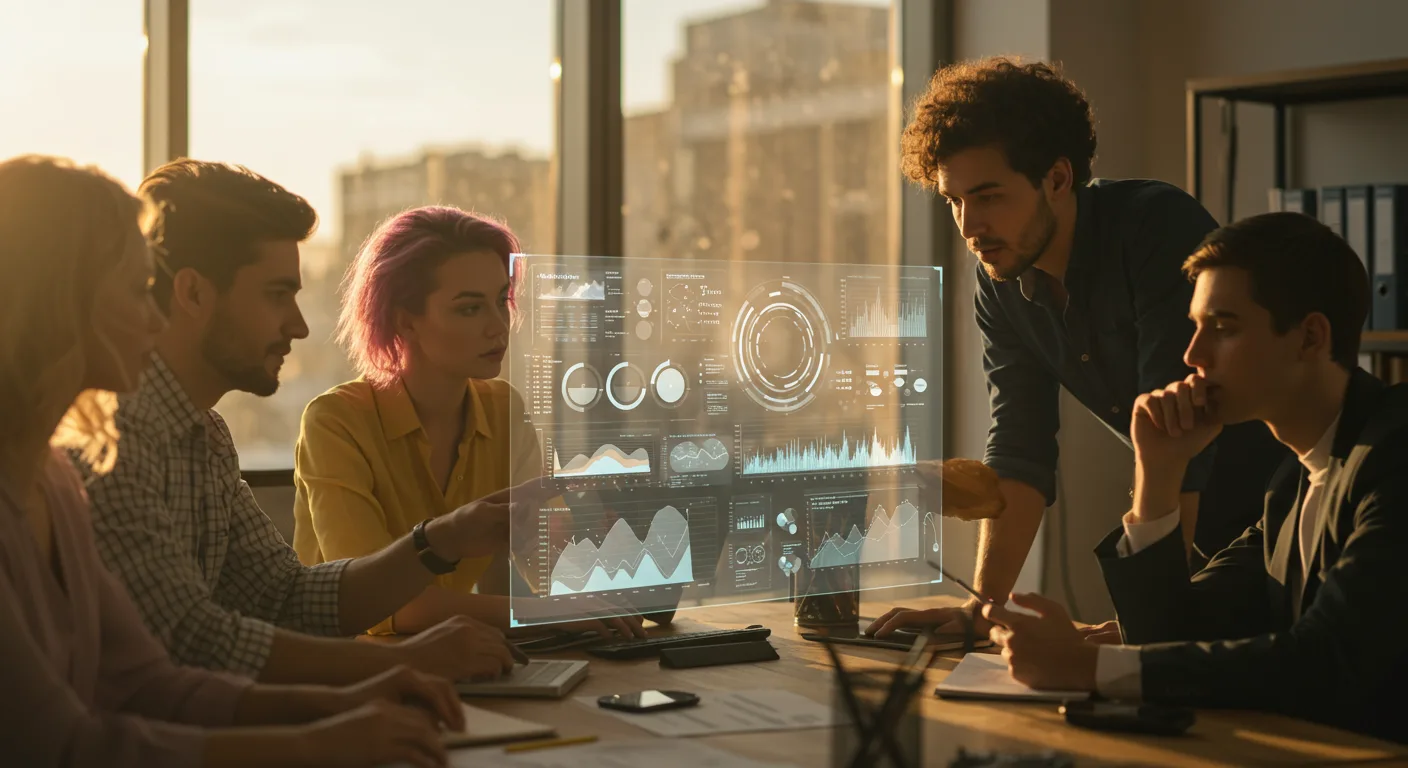
The Future of Expert Insights: Key Predictions for Marketing
The need for expert insights is growing exponentially in the fast-paced world of marketing. As data explodes and consumer behavior evolves at warp speed, businesses are increasingly relying on specialized knowledge to make informed decisions and stay ahead of the curve. But how will expert insights be sourced, delivered, and consumed in the coming years? Will AI replace human expertise, or will a new symbiotic relationship emerge?
The Rise of AI-Augmented Expert Analysis
Artificial intelligence (AI) is no longer a futuristic fantasy; it’s a present-day reality transforming how we approach expert analysis. In the coming years, we’ll see a significant shift towards AI-augmented expertise, where AI tools assist human experts in analyzing vast datasets, identifying patterns, and generating actionable recommendations. AI won’t replace experts, but it will empower them to work more efficiently and effectively.
For example, imagine a marketing team analyzing customer sentiment across social media. Instead of manually sifting through thousands of posts, they can use AI-powered sentiment analysis tools to quickly identify key trends and themes. The human expert can then focus on interpreting those trends and developing targeted marketing strategies. HubSpot, for example, already uses AI to help marketers personalize content and automate tasks. Expect these features to become more sophisticated and integrated into every aspect of marketing.
A recent report by Gartner predicts that by 2028, AI will augment 75% of enterprise knowledge workers, leading to a 25% increase in productivity.
This shift towards AI-augmented expertise requires marketers to develop new skills. They need to be able to understand the capabilities and limitations of AI tools, interpret AI-generated insights, and translate those insights into actionable strategies. This means investing in training and development programs to equip marketers with the necessary skills to thrive in an AI-driven world.
Personalized Expert Recommendations at Scale
The demand for personalized experiences is increasing across all industries, and personalized expert recommendations are no exception. In the future, we’ll see a growing trend towards delivering expert insights in a more personalized and relevant way. This means tailoring recommendations to the specific needs and goals of individual businesses and even individual marketers.
One way to achieve this is through the use of AI-powered recommendation engines. These engines can analyze a marketer’s past behavior, preferences, and goals to identify the most relevant expert insights and resources. For example, a marketer who is struggling to improve their email open rates might be recommended articles, webinars, or even one-on-one consultations with email marketing experts.
Another approach is to leverage micro-segmentation. By dividing the target audience into smaller, more homogenous groups, marketers can deliver more targeted and relevant expert insights. For example, a company selling software to small businesses might create separate micro-segments for businesses in different industries, such as retail, healthcare, and education. They can then tailor their expert recommendations to the specific needs and challenges of each industry.
The Democratization of Expert Knowledge
Expert insights are no longer the exclusive domain of large corporations and well-funded research institutions. The internet has made it easier than ever for individuals and small businesses to access and share expert knowledge. This trend towards the democratization of expert knowledge will only accelerate in the coming years.
Online platforms like Coursera and Udemy have made it possible for anyone to learn from leading experts in their field. Social media platforms like LinkedIn and Twitter have created opportunities for experts to share their insights and engage with a wider audience. And new platforms are emerging that are specifically designed to connect experts with businesses and individuals who need their help.
This democratization of expert knowledge has several implications for marketers. First, it means that they have access to a wider range of perspectives and insights than ever before. Second, it means that they need to be more discerning about the sources they trust. And third, it means that they need to be prepared to share their own expertise with others.
The Growing Importance of Data-Driven Insights
In the age of big data, data-driven insights are becoming increasingly important for marketers. The ability to collect, analyze, and interpret data is essential for understanding customer behavior, measuring the effectiveness of marketing campaigns, and making informed decisions.
In the future, we’ll see a growing emphasis on using data to validate expert insights. Instead of relying solely on intuition or anecdotal evidence, marketers will increasingly demand data to support the claims made by experts. This means that experts need to be able to back up their recommendations with solid data and analytics.
For example, if an expert recommends a particular marketing strategy, they should be able to provide data showing that the strategy has been successful in similar situations. They should also be able to explain the methodology used to collect and analyze the data. Tools like Google Analytics and other analytics platforms will become even more critical in this process.
According to a 2025 study by Forrester, companies that are “data-driven” are 58% more likely to exceed their revenue goals.
Authenticity and Transparency in Expert Communication
In a world saturated with information, authenticity and transparency in expert communication are becoming increasingly important. Consumers are more skeptical than ever before, and they are quick to spot insincerity or hidden agendas. This means that experts need to be genuine, honest, and transparent in their communication.
One way to build trust is to be upfront about any potential biases or conflicts of interest. For example, if an expert is being paid to promote a particular product or service, they should disclose that fact to their audience. They should also be transparent about the methodology used to arrive at their conclusions.
Another way to build trust is to be willing to admit when you are wrong. No one is perfect, and everyone makes mistakes. By acknowledging your mistakes and learning from them, you can demonstrate your integrity and build credibility with your audience.
Finally, it’s important to be human. Share your personal experiences, tell stories, and let your personality shine through. People are more likely to trust someone they feel they can connect with on a personal level.
The Convergence of Expert Insights and Marketing Technology
The future of expert insights is inextricably linked to the evolution of marketing technology. As marketing technology continues to advance, we’ll see a greater convergence of these two areas. This means that expert insights will be increasingly integrated into marketing technology platforms and tools.
For example, imagine a marketing automation platform that incorporates expert insights into its workflow. The platform could automatically recommend the most effective marketing tactics based on the specific goals and characteristics of each customer. It could also provide access to expert advice and guidance within the platform itself. Salesforce is already moving in this direction with its Einstein AI platform, which provides data-driven insights and recommendations to marketers.
This convergence of expert insights and marketing technology will empower marketers to make more informed decisions, optimize their marketing campaigns, and achieve better results. It will also create new opportunities for experts to share their knowledge and reach a wider audience.
In conclusion, the future of expert insights in marketing is bright. AI-augmentation, personalization, democratization, data-driven validation, authenticity, and technological convergence are key trends shaping the landscape. By embracing these trends, marketers can leverage expert insights to drive growth and success. The actionable takeaway is to invest in AI literacy and focus on building authentic relationships with experts to gain a competitive edge.
How can AI help marketers leverage expert insights more effectively?
AI can analyze vast datasets, identify patterns, and generate actionable recommendations, allowing human experts to focus on interpretation and strategy. It also facilitates personalized recommendations at scale.
What skills will marketers need to succeed in the future of expert insights?
Marketers will need to understand AI capabilities and limitations, interpret AI-generated insights, and translate those insights into actionable strategies. Data analysis and critical thinking skills are also essential.
How can businesses ensure the authenticity and transparency of expert insights?
Experts should be upfront about potential biases or conflicts of interest, transparent about their methodology, and willing to admit mistakes. Sharing personal experiences and being human also builds trust.
What is the impact of the democratization of expert knowledge on marketing?
It provides access to a wider range of perspectives, requires more discerning source selection, and encourages sharing one’s own expertise. It levels the playing field for smaller businesses.
How will marketing technology integrate with expert insights in the future?
Expert insights will be increasingly integrated into marketing technology platforms, offering automated recommendations, access to expert advice, and data-driven decision-making tools.



