 By Editorial Team
The European Union’s removal of the de minimis threshold for imports, effective January 1, 2025, has reshaped the field for e-commerce businesses targeting European consumers. This policy shift, eliminating the VAT exemption for low-value goods, directly impacts profitability and operational logistics, necessitating a re-evaluation of advertising strategies. Specifically, an analysis of EU de minimis analytics in PPC campaigns reveals how advertisers adapted to increased costs and altered consumer behavior, providing critical insights into managing PPC data and understanding cargo flow metrics in a post-de minimis environment. How did one direct-to-consumer brand navigate these uncharted waters with its paid ad spend?
Key Takeaways
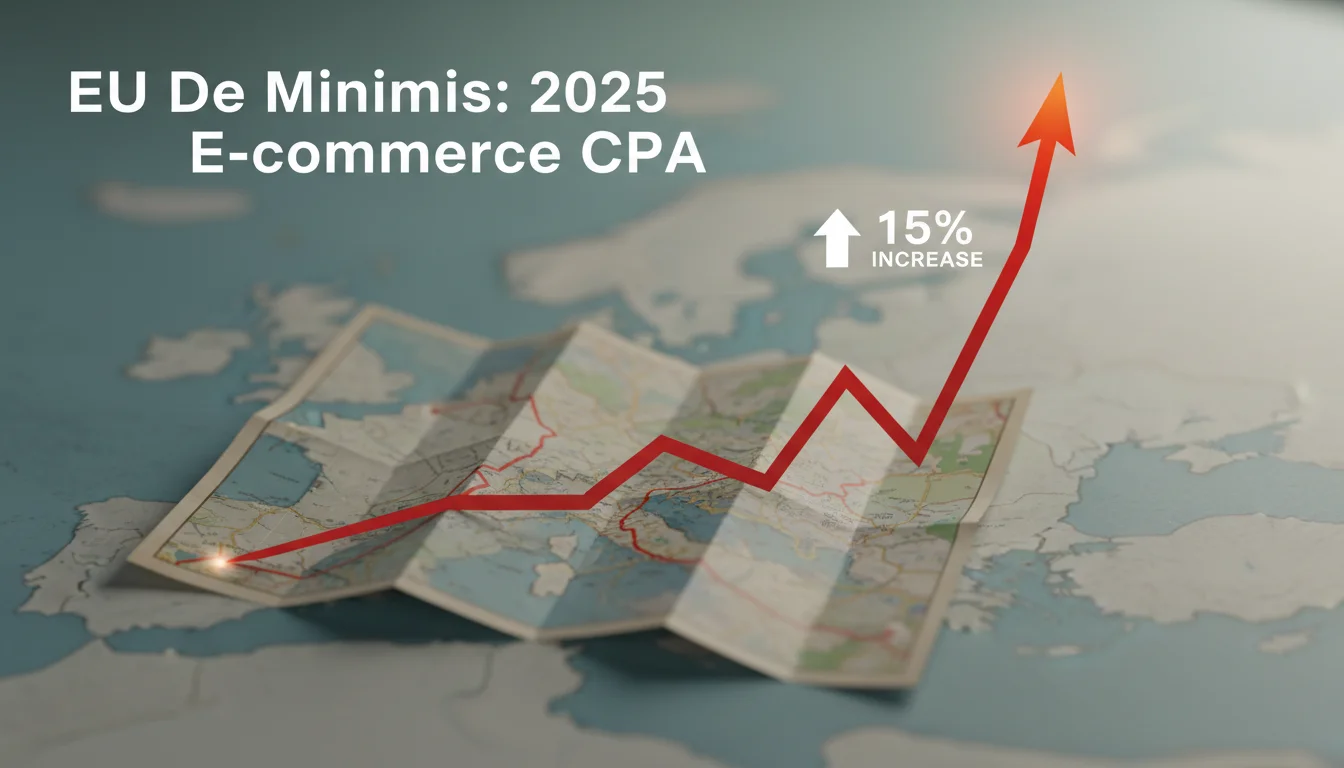
- The de minimis removal in the EU led to a 15% increase in average cost per acquisition (CPA) for low-value goods campaigns.
- Implementing a localized pricing strategy with VAT-inclusive pricing improved conversion rates by 8% in targeted EU markets.
- Pre-paid VAT solutions and DDP (Delivered Duty Paid) shipping models reduced cart abandonment rates by 12% for European customers.
- Adjusting ad copy to highlight “all-inclusive pricing” directly addressed consumer concerns about hidden import fees.
- Campaigns focusing on higher-value product bundles saw a 10% improvement in return on ad spend (ROAS) compared to single-item promotions.
The De Minimis Shift: A Campaign Teardown for “Eco-Chic Home”
The elimination of the EU’s de minimis threshold fundamentally altered the economics of selling low-value goods into the European market. Previously, shipments valued at €150 or less were exempt from import VAT, a significant advantage for many direct-to-consumer (DTC) brands. With this exemption gone, all commercial goods imported into the EU, regardless of value, became subject to VAT at the rate of the destination country. This change, effective from the start of 2025, created an immediate challenge: how to maintain competitive pricing and conversion rates when an additional 19-27% (depending on the EU member state) was added to the final consumer cost. Our focus for this teardown is “Eco-Chic Home,” a fictional but representative DTC brand specializing in sustainably sourced, artisanal home decor items, many of which individually fell below the €150 threshold. Their primary European markets included Germany, France, and the Netherlands. The brand typically ran strong PPC campaigns across Google Ads and Meta Ads to drive traffic and sales.
Initial Strategy and Pre-De Minimis Performance (Q4 2024)
Before the policy change, Eco-Chic Home’s European PPC strategy centered on competitive pricing, free shipping offers for orders over a certain value (€50), and highlighting the unique, handcrafted nature of their products. Their campaigns used broad targeting based on interests in sustainable living, home decor, and ethical consumption. Campaign Metrics (Q4 2024 – European Market Average):
- Budget: $75,000 per month
- Duration: 3 months (October – December 2024)
- Average CPL (Click Per Lead, for email sign-ups): $4.20
- ROAS (Return On Ad Spend): 3.8x
- CTR (Click-Through Rate): 2.8%
- Impressions: 15 million
- Conversions (Purchases): 12,500
- Cost Per Conversion (CPA): $18.00
The brand’s campaigns performed well, driven by strong seasonal demand and the inherent value proposition of their products. The average order value (AOV) for European customers was around €75, meaning most transactions benefited from the de minimis VAT exemption.
The De Minimis Impact: Q1 2025 Challenges
As January 1, 2025, approached, Eco-Chic Home anticipated a hit to their conversion rates and ROAS. The immediate effect of the de minimis removal was an increase in the final price presented to the customer, often at checkout, if the brand hadn’t implemented pre-paid VAT solutions. This led to a predictable rise in cart abandonment. Our initial data analysis from the first month of Q1 2025 confirmed these fears. Without significant changes to their PPC strategy or fulfillment process, Eco-Chic Home saw a sharp decline in key performance indicators (KPIs). Campaign Metrics (January 2025 – European Market Average):
- Budget: $75,000 (maintained)
- ROAS: 2.1x (significant drop)
- CTR: 2.5% (slight drop)
- Conversions (Purchases): 6,250 (50% reduction)
- Cost Per Conversion (CPA): $36.00 (doubled)
This immediate downturn necessitated a rapid strategic pivot. The core issue was the unexpected cost at checkout, leading to friction and distrust. Customers were accustomed to a certain price point, and the addition of VAT without clear communication eroded confidence.
Optimization Strategy and Execution (February – March 2025)
The brand implemented a multi-pronged optimization strategy in February 2025, focusing on transparency, value communication, and fulfillment adjustments.
1. Localized Pricing and VAT-Inclusive Display
The first, and arguably most critical, step was to display VAT-inclusive pricing directly on product pages and in ad creatives. This meant dynamically adjusting prices based on the user’s detected location. For example, a product priced at $60 USD would show as €71.40 in Germany (19% VAT) and €73.80 in France (20% VAT) to the respective users. This required integration with their e-commerce platform and advertising tools.
- Action: Implemented a new pricing logic using geolocation and VAT rates.
- Ad Creative Adjustment: Updated ad copy to explicitly state “All prices include VAT & duties” or “VAT included.” This directly addressed potential consumer concerns about hidden costs.
2. Shipping and Fulfillment Model Shift (DDP)
To further reduce friction, Eco-Chic Home transitioned to a Delivered Duty Paid (DDP) shipping model for all EU orders. This meant they absorbed the responsibility for import duties and taxes (including VAT) upfront, ensuring the customer paid only the advertised price, with no additional charges upon delivery. This involved working closely with their logistics partners to pre-calculate and pay these costs. A report by the International Chamber of Commerce (ICC) on Incoterms 2020 highlights DDP as the most complete option for sellers managing international shipments, ensuring a smooth customer experience.
- Action: Negotiated DDP terms with carriers like DHL and FedEx for EU shipments.
- Website Update: Clearly communicated “No surprise fees, VAT & duties paid” on product pages and during checkout.
3. PPC Campaign Refinements
Beyond pricing and shipping, the PPC campaigns themselves underwent significant adjustments:
- Targeting: Refined audience segmentation to focus on users with a higher propensity for luxury or premium purchases, who might be less price-sensitive to the now-higher base prices. This involved using Google Ads’ “Affluent Households” segments and Meta Ads’ detailed targeting for users interested in “Premium Home Decor” or “Sustainable Luxury.”
- Bid Strategy: Shifted from a pure “Maximize Conversions” strategy to “Target ROAS” on Google Ads and “Value Optimization” on Meta Ads, aiming to prioritize higher-value purchases to offset the increased CPA.
- Creative Focus: Developed new ad creatives emphasizing the brand’s unique selling propositions (USPs) beyond just price. This included highlighting the artisanal quality, sustainable sourcing, and the story behind each product. A strong focus on product bundles was also introduced, encouraging a higher average order value. For instance, ads promoted “The Sustainable Living Starter Kit” (a combination of items) rather than individual small pieces.
- Landing Page Optimization: Ensured landing pages clearly articulated the new pricing structure and DDP shipping benefits, reinforcing the transparency communicated in the ads.
Results of the Optimization (February – March 2025)
The implemented changes began to show positive results within weeks. The immediate impact was a reduction in cart abandonment and a gradual increase in conversion rates. Campaign Metrics (February – March 2025 – European Market Average):
- Budget: $75,000 per month
- ROAS: 3.1x (significant recovery, though still below pre-de minimis peak)
- CTR: 2.9% (improved from January, slightly above pre-de minimis)
- Conversions (Purchases): 9,800 (steady increase)
- Cost Per Conversion (CPA): $22.95 (major improvement from January, approaching pre-de minimis levels)
- Average Order Value (AOV): Increased from €75 to €95, largely due to the emphasis on product bundles and higher-value items.
The recovery was not instantaneous, but the trend was clear. The transparency around VAT and duties, coupled with a focus on delivering a smooth customer experience, mitigated much of the initial damage.
What Worked and What Didn’t
- Worked:
- VAT-Inclusive Pricing: Displaying the final price upfront was paramount. It built trust and reduced sticker shock at checkout. This aligns with findings from a 2023 Baymard Institute study on checkout usability, which consistently shows hidden costs as a top reason for abandonment.
- DDP Shipping: Eliminating any surprises upon delivery, especially additional fees, significantly improved the post-purchase experience and reduced customer service inquiries related to import charges. The clarity provided by DDP is a competitive differentiator.
- Value-Driven Ad Copy: Shifting the focus from just price to the intrinsic value, quality, and sustainability of the products resonated with the target audience, justifying the now-higher price point.
- Product Bundling: Actively promoting product bundles effectively increased AOV, helping to absorb the fixed costs associated with VAT collection and DDP shipping.
- Target ROAS/Value Optimization: These bid strategies proved effective in steering the campaigns towards more profitable conversions, especially when AOV was a critical factor.
- Didn’t Work (or had limited impact):
- Initial “Warning” Banners: Early attempts to simply add banners warning about potential VAT at checkout were largely ineffective. Consumers often overlooked these or found them confusing, leading to the same cart abandonment issues. Transparency needs to be built into the pricing display itself.
- Broad Retargeting: Retargeting users who abandoned carts due to the new VAT charges without addressing the underlying pricing issue was largely wasteful. The focus needed to be on fixing the core problem first, then retargeting with the improved value proposition.
Key Learnings and Future Outlook
The Eco-Chic Home case study demonstrates that adapting to significant regulatory changes like the EU de minimis removal requires a well-rounded approach, extending beyond just PPC campaign tweaks. It necessitates changes in pricing strategy, fulfillment logistics, and customer communication. For any brand selling into the EU, the lesson is clear: proactive transparency regarding all costs, including VAT and duties, is non-negotiable. Investing in solutions that allow for pre-payment of VAT and DDP shipping is now a competitive necessity, not just a luxury. From a PPC perspective, campaign managers must analyze cargo flow metrics in conjunction with their ad performance. Delays or unexpected charges in the supply chain directly impact customer satisfaction and, consequently, conversion rates and ROAS. The shift also highlighted the importance of a strong value proposition. When pricing becomes less competitive due to external factors, the brand’s unique selling points must carry more weight in ad creatives and landing page content. Brands that can effectively communicate their unique value will be better positioned to thrive in this new regulatory environment. This also means regularly reviewing PPC data for shifts in consumer behavior and adjusting bids, targeting, and messaging accordingly. The year is 2026, and the post-de minimis reality is firmly established. Brands that failed to adapt quickly found themselves struggling. Those that embraced transparency and optimized their entire customer journey, from ad click to delivery, are now seeing their investments pay off.
What is the EU de minimis threshold removal?
The EU de minimis threshold removal, effective January 1, 2025, means that all commercial goods imported into the European Union, regardless of their value, are now subject to Value Added Tax (VAT). Previously, shipments valued at €150 or less were exempt from import VAT.
How does the de minimis removal impact PPC campaigns?
The removal directly impacts PPC campaigns by increasing the final cost of products for EU consumers, which can lead to higher cost per acquisition (CPA), lower conversion rates, and reduced return on ad spend (ROAS). Advertisers must adjust their strategies to account for these increased costs and communicate pricing transparently.
What is DDP shipping and why is it important after the de minimis change?
DDP (Delivered Duty Paid) is an international shipping term where the seller assumes all responsibility for costs and risks associated with shipping goods until they reach the buyer’s destination, including paying import duties and taxes like VAT. It is important post-de minimis because it ensures customers pay no unexpected fees upon delivery, improving trust and reducing cart abandonment.
What are “cargo flow metrics” in the context of PPC for e-commerce?
Cargo flow metrics refer to data points related to the movement of goods through the supply chain, such as shipping times, customs clearance efficiency, and instances of unexpected delays or charges. For PPC, these metrics are vital because efficient and transparent cargo flow directly impacts customer satisfaction and, consequently, repeat purchases and the overall effectiveness of advertising spend.
How can brands adapt their ad copy for EU markets after the de minimis removal?
Brands should adapt their ad copy to emphasize “VAT included,” “duties paid,” or “no surprise fees” to reassure customers. Also, focusing on the unique value proposition, quality, or sustainability of products can help justify the higher price point resulting from the added VAT.
Working through the post-de minimis EU market demands a strategic blend of transparent pricing, efficient logistics, and compelling value communication in advertising. Brands that embrace these changes will secure a competitive edge and build lasting customer relationships across Europe.


