 By Editorial Team
The conversation around artificial intelligence in marketing is rife with misinformation, particularly when discussing its financial implications for pay-per-click (PPC) campaigns. Many businesses hesitate to adopt AI solutions, fearing exorbitant costs or questionable returns. However, the reality of AI cost-effectiveness in marketing, specifically for PPC, reveals a different picture. The strategic application of AI tools can significantly enhance PPC ROI, driving down ad spend while simultaneously improving campaign performance. This isn’t just about marginal gains. It’s about fundamentally reshaping how budgets are allocated and optimized for maximum impact.
Key Takeaways
- AI tools can reduce manual PPC management time by up to 40%, freeing up resources for strategic planning.
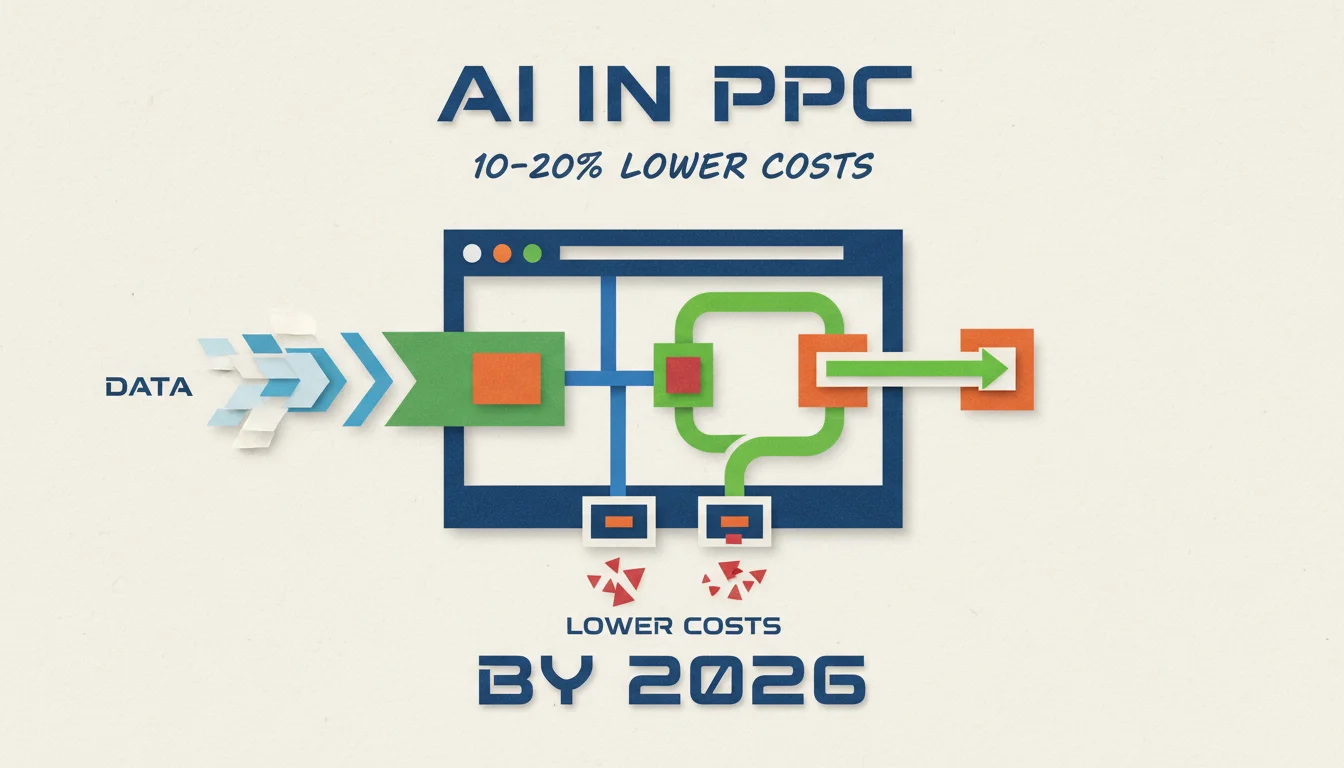
- Implementing AI for bid management often leads to a 10% to 20% reduction in cost-per-conversion due to real-time optimization.
- AI-powered ad copy generation can improve click-through rates by an average of 15% compared to manually written ads.
- Using AI for audience segmentation can uncover new high-value customer groups, increasing conversion rates by 5% to 10%.
- Businesses adopting AI in PPC can see a measurable increase in overall campaign profitability within six months of integration.
Myth 1: AI is Exclusively for Large Enterprises with Massive Budgets
One of the most persistent myths is that only multinational corporations with deep pockets can afford to implement AI in their marketing efforts. This simply isn’t true in 2026. The accessibility of AI has broadened dramatically, with plenty of Software-as-a-Service (SaaS) platforms offering AI-powered solutions tailored for businesses of all sizes. For instance, many ad platforms now integrate AI features directly into their interfaces, making advanced capabilities available to even small businesses running local campaigns in areas like Atlanta’s Midtown or Buckhead business districts.
Consider the evolution of bid management. Historically, sophisticated algorithms were proprietary to large agencies or in-house teams. Today, platforms like Google Ads’ Smart Bidding strategies, which use advanced machine learning, are available to every advertiser. These tools automatically adjust bids in real time based on a multitude of signals, including device type, location, time of day, and user behavior, aiming to achieve specific goals like maximizing conversions or target return on ad spend (ROAS). A study by eMarketer in late 2025 indicated that over 60% of small to medium-sized businesses (SMBs) surveyed were already using some form of AI-driven automation in their digital advertising, with a significant portion reporting improved efficiency and performance. This isn’t about licensing expensive enterprise software. It’s about using features baked into the platforms you already use or subscribing to affordable, specialized tools.
Myth 2: AI Replaces Human PPC Specialists, Leading to Job Losses
The fear that AI will render human PPC managers obsolete is a common misconception. While AI excels at automating repetitive, data-intensive tasks, it lacks the strategic insight, creativity, and nuanced understanding of human behavior that define effective marketing. Instead of replacement, we’re seeing a powerful teamwork. AI handles the heavy lifting of data analysis, bid adjustments, budget pacing, and even ad copy variations, freeing up human specialists to focus on higher-level strategic initiatives. This includes developing overarching campaign themes, understanding market shifts, crafting compelling brand narratives, and interpreting complex performance trends that AI might flag but not fully explain.
For example, an AI system can analyze thousands of search queries to identify new negative keyword opportunities or suggest precise ad copy variations that resonate with specific audience segments. However, a human expert is still essential to interpret why certain trends are emerging, to negotiate budget allocations across different channels, or to pivot campaign strategy based on broader business objectives or external market events. According to a recent IAB report on the future of advertising technology, agencies that successfully integrate AI into their workflows report a 30% increase in productivity per specialist, allowing them to manage more accounts or dedicate more time to client strategy and innovation. This isn’t job loss. It’s job evolution, where the human role shifts from tactical execution to strategic oversight and creative direction.
Myth 3: AI Implementation is Overly Complex and Requires Data Science Expertise
The idea that adopting AI for marketing requires hiring a team of data scientists or undertaking a massive IT overhaul is a significant barrier for many. While advanced custom AI solutions certainly exist, the majority of AI tools available for PPC today are designed for marketers, not data scientists. Platforms have become increasingly user-friendly, offering intuitive interfaces and guided setups. Many AI-powered tools integrate directly with existing ad platforms like Google Ads or Meta Ads Manager, simplifying data flow and activation.
Consider the process of setting up AI-driven audience segmentation. Instead of writing complex algorithms, a marketer might simply feed their CRM data into a platform like Segment or Tealium, and the AI will identify high-value customer clusters based on purchasing behavior, demographics, and engagement patterns. The output is actionable segments that can be directly uploaded to ad platforms for targeting. Similarly, AI-powered tools for generating ad copy, such as those offered by Copy.ai or Jasper, require only basic input like product descriptions or target keywords. These tools then generate multiple creative options, often outperforming human-written first drafts in initial A/B tests. The complexity is abstracted away, allowing marketers to focus on using the insights and outputs rather than building the underlying models. The learning curve for these tools is often comparable to mastering a new analytics dashboard, not learning Python.
Myth 4: AI in PPC Only Offers Marginal Gains, Not Significant ROI
Some skeptics believe that AI’s contribution to PPC performance is minimal, offering only slight improvements that don’t justify the investment. This perspective often underestimates the cumulative effect of AI’s capabilities across various aspects of a PPC campaign. AI doesn’t just optimize one element. It can simultaneously enhance bid strategies, audience targeting, ad creative, and budget allocation, leading to compounding positive effects on ROI.
For example, an AI system can analyze millions of data points to predict the likelihood of conversion for each individual ad impression. This allows for hyper-granular bidding, ensuring that higher bids are placed only on impressions with a high probability of converting, and lower bids (or no bids) on those less likely to convert. This precision dramatically reduces wasted ad spend. A case study published by HubSpot in late 2025 detailed how a mid-sized e-commerce company, after fully integrating AI into its Google Shopping campaigns, saw a 22% increase in ROAS within six months, primarily due to more efficient bid management and dynamic product ad optimization. Plus, AI’s ability to rapidly test and iterate ad creatives means that winning variations are identified and scaled much faster than through manual A/B testing, leading to sustained improvements in click-through rates and conversion rates. The combined effect of these optimizations often translates into substantial improvements in PPC ROI, making the initial investment in AI tools highly cost-effective over time. We’re talking about moving the needle by double-digit percentages, not just a point or two.
Myth 5: AI Lacks Transparency, Making It a “Black Box” That’s Hard to Trust
The concern that AI operates as an opaque “black box,” making decisions without clear explanations, is a valid one that has been largely addressed by advancements in explainable AI (XAI) and improved platform reporting. While the underlying algorithms can be complex, many AI tools now provide detailed insights into their decision-making processes, offering transparency that helps marketers understand and trust the recommendations.
For instance, modern AI-powered bid management platforms often provide reports detailing which factors influenced a particular bid adjustment (e.g., “bid increased by 15% due to user’s high purchase intent based on recent site activity and location within 5 miles of a retail store”). Similarly, AI tools for ad copy generation can highlight which elements of a headline or description are most effective for specific audience segments, providing data-backed rationale for their suggestions. Google Ads’ Recommendations tab, for example, frequently provides AI-driven suggestions for improving campaigns, often with clear explanations of the potential impact. This transparency allows marketers to validate AI’s suggestions, learn from its insights, and intervene if necessary. It’s no longer about blindly trusting an algorithm. It’s about collaborating with an intelligent assistant that provides data-driven justifications for its actions. My advice to clients is always to start with smaller tests, observe the transparency features, and gradually scale up as confidence builds. You wouldn’t hand over your entire budget to an untested employee, and the same caution applies here, but the data is there to build trust.
The narrative surrounding AI in marketing, particularly for PPC, is often clouded by outdated perceptions and fear. The reality in 2026 is that AI tools are increasingly accessible, user-friendly, and capable of delivering significant, measurable improvements in cost-effectiveness and ROI. By dispelling these common myths, businesses can confidently integrate AI into their PPC strategies, shifting from manual, reactive management to proactive, data-driven optimization that drives superior results.
How quickly can I expect to see ROI from AI in PPC?
While specific timelines vary, many businesses report seeing measurable improvements in key metrics like cost-per-conversion or ROAS within three to six months of implementing AI-powered PPC solutions, especially when focusing on automated bid management and ad creative optimization.
What are the most impactful AI applications for small businesses in PPC?
For small businesses, the most impactful AI applications often include smart bidding strategies offered directly within ad platforms (like Google Ads Smart Bidding), AI-powered keyword research tools to identify long-tail opportunities, and basic AI-driven ad copy generators to create variations quickly.
Does AI require a large amount of historical data to be effective in PPC?
While more historical data generally leads to better AI performance, many modern AI tools can still be effective with relatively smaller datasets. They often use broader industry data or use transfer learning techniques to start optimizing even with limited historical campaign information.
Can AI help with localized PPC campaigns, like for businesses in specific Atlanta neighborhoods?
Absolutely. AI excels at analyzing hyper-local data points. It can optimize bids based on foot traffic patterns near a specific store in, say, Virginia-Highland, adjust ad delivery based on local event schedules, and tailor ad copy to resonate with residents of a particular zip code, leading to highly effective localized campaigns.
What is the biggest risk when integrating AI into PPC?
The biggest risk is often over-automation without human oversight. While AI is powerful, it still requires strategic guidance and regular monitoring by a human expert to ensure it aligns with broader business goals, adapts to unexpected market changes, and avoids optimizing for vanity metrics that don’t drive real business value.


