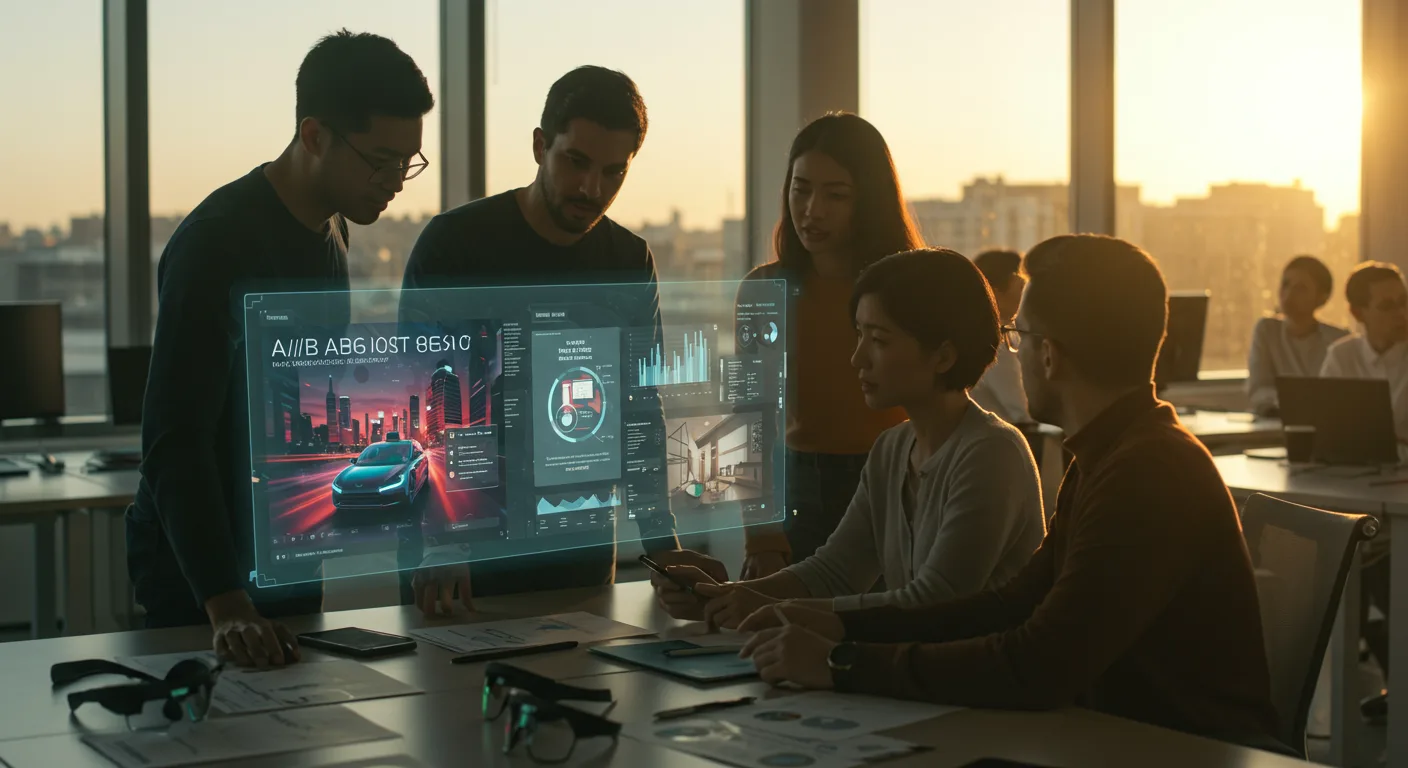
The Future of A/B Testing Ad Copy: Key Predictions
Crafting compelling ad copy is a constant challenge for marketers. The rise of AI and machine learning is rapidly changing how we approach a/b testing ad copy, making it faster, more efficient, and more personalized. But what does the future hold for this critical aspect of marketing? Will human creativity still be relevant, or will algorithms take over entirely?
1. Hyper-Personalization Driven by AI
The days of broad demographic targeting are fading fast. In 2026, hyper-personalization is the name of the game, and AI is the key to unlocking it. We’re moving beyond simply using a user’s name in an ad. Instead, AI algorithms analyze vast amounts of data – browsing history, purchase behavior, social media activity, and even real-time contextual information like weather and location – to create ad copy that resonates with each individual on a deeply personal level.
Imagine an ad for running shoes that appears to a user immediately after they’ve searched for local marathon training programs, mentioning the specific marathon they searched for, and highlighting features of the shoes that are beneficial for long-distance running in the current weather conditions. This level of personalization is already becoming a reality, and it will only become more sophisticated in the coming years.
This level of personalization necessitates more than just dynamic keyword insertion. It requires sophisticated natural language generation (NLG) models that can adapt tone, style, and messaging to match individual preferences. We’ll see a shift from A/B testing static ad variations to A/B testing AI-generated ad copy that is constantly evolving based on user interactions.
According to a recent report by Gartner, companies that have fully embraced personalization across all channels are seeing a 20% increase in marketing ROI.
2. Predictive A/B Testing: Minimizing Risk and Maximizing ROI
Traditional A/B testing involves running experiments and analyzing the results to see which ad copy performs best. However, this process can be time-consuming and costly, especially when dealing with large-scale campaigns. The future of A/B testing lies in predictive analytics. AI algorithms can now analyze historical data and predict the performance of different ad copy variations before they are even launched.
Tools like Optimizely are already incorporating machine learning to provide insights into which ad copy variations are most likely to succeed. By 2026, these predictive capabilities will be even more advanced, allowing marketers to identify potential winners and losers with a high degree of accuracy. This will enable them to focus their resources on the most promising ad copy variations, minimizing risk and maximizing ROI.
Here’s how predictive A/B testing will work in practice:
- Data Collection: AI algorithms gather data from various sources, including past A/B tests, website analytics, customer demographics, and market trends.
- Model Training: The data is used to train machine learning models that can predict the performance of different ad copy variations.
- Ad Copy Generation: The AI algorithms generate multiple ad copy variations based on the data and the desired marketing goals.
- Performance Prediction: The models predict the performance of each ad copy variation, including metrics like click-through rate (CTR), conversion rate, and cost per acquisition (CPA).
- Optimization: Marketers can then choose the ad copy variations with the highest predicted performance and launch their campaigns with confidence.
3. The Rise of Multimodal A/B Testing
Ad copy is no longer limited to text. With the proliferation of visual and audio content, multimodal A/B testing is becoming increasingly important. This involves testing different combinations of text, images, videos, and audio to see which resonates best with the target audience.
For example, a company selling headphones could A/B test different combinations of ad copy, images of the headphones, and audio snippets showcasing the sound quality. Similarly, a travel agency could test different combinations of ad copy, videos of destinations, and music that evokes a sense of wanderlust. HubSpot and other marketing platforms are expanding their capabilities to accommodate these richer ad formats.
The challenge with multimodal A/B testing is that it requires more sophisticated tools and techniques. It’s not enough to simply test different elements in isolation. Marketers need to understand how these elements interact with each other to create a cohesive and compelling ad experience. This requires advanced analytics and a deep understanding of user psychology.
4. Ethical Considerations in AI-Powered Ad Copy
As AI becomes more powerful, it’s crucial to address the ethical implications of using it to create ad copy. One of the biggest concerns is the potential for AI to create misleading or manipulative ads. For example, an AI algorithm could generate ad copy that exploits users’ fears or insecurities to drive sales. It is important that platforms like Google Ads and Facebook Ads implement safeguards.
Another concern is the potential for AI to perpetuate biases. If the data used to train the AI algorithms is biased, the resulting ad copy could reflect those biases. For example, an AI algorithm trained on data that overrepresents men in leadership positions could generate ad copy that reinforces gender stereotypes.
To address these ethical concerns, marketers need to adopt a responsible approach to AI-powered ad copy. This includes:
- Ensuring that the data used to train AI algorithms is representative and unbiased.
- Implementing safeguards to prevent AI from generating misleading or manipulative ads.
- Being transparent about the use of AI in ad copy creation.
- Regularly auditing AI algorithms to identify and address potential biases.
5. The Evolving Role of the Human Copywriter
While AI is automating many aspects of ad copy creation, the role of the human copywriter is far from obsolete. In fact, human creativity and strategic thinking are more important than ever. The best approach is a hybrid model where humans and AI work together to create compelling ad copy.
Human copywriters will focus on the following:
- Developing the overall marketing strategy: AI can help with tactical execution, but humans are still needed to define the overall goals and objectives of a marketing campaign.
- Understanding the target audience: While AI can analyze data to identify audience segments, humans are better at understanding the nuances of human behavior and motivations.
- Crafting the core message: AI can generate ad copy variations, but humans are needed to develop the core message that resonates with the target audience.
- Ensuring ethical and responsible use of AI: Humans are needed to oversee the use of AI in ad copy creation and ensure that it is used ethically and responsibly.
In a 2025 survey conducted by the Content Marketing Institute, 78% of marketers said that human creativity is essential for creating effective ad copy, even with the rise of AI.
The copywriters of the future will be more data-driven and technically savvy than ever before. They’ll need to understand how AI algorithms work and how to use them effectively. They’ll also need to be able to analyze data and identify insights that can inform their ad copy. This requires a combination of creative skills, analytical skills, and technical expertise.
Will AI completely replace human copywriters in ad creation?
No, it’s unlikely AI will completely replace human copywriters. While AI can automate many tasks, human creativity, strategic thinking, and ethical oversight are still essential for creating effective and responsible ad copy. The future is a hybrid model where humans and AI work together.
What skills will be most important for copywriters in the future?
In addition to traditional writing skills, future copywriters will need to be data-driven and technically savvy. They’ll need to understand AI algorithms, analyze data, and ensure the ethical use of AI in ad creation.
How can I prepare for the future of A/B testing ad copy?
Start by learning about AI and machine learning. Experiment with AI-powered marketing tools. Develop your analytical skills and learn how to interpret data. Stay up-to-date on the latest trends and best practices in the field.
What are the biggest ethical concerns surrounding AI-powered ad copy?
The biggest ethical concerns include the potential for AI to create misleading or manipulative ads, perpetuate biases, and exploit users’ fears or insecurities. It’s crucial to implement safeguards and ensure responsible use of AI.
What is multimodal A/B testing?
Multimodal A/B testing involves testing different combinations of text, images, videos, and audio to see which resonates best with the target audience. This approach recognizes the importance of visual and audio content in modern advertising.
In conclusion, the future of a/b testing ad copy is being shaped by AI-driven hyper-personalization, predictive analytics, and multimodal experimentation. While AI will automate many tasks, the human copywriter will remain essential for strategic thinking, ethical oversight, and creative messaging. Embrace these changes and invest in the skills necessary to thrive in this evolving landscape. What steps will you take today to prepare for the AI-powered future of marketing?



