 By Editorial Team
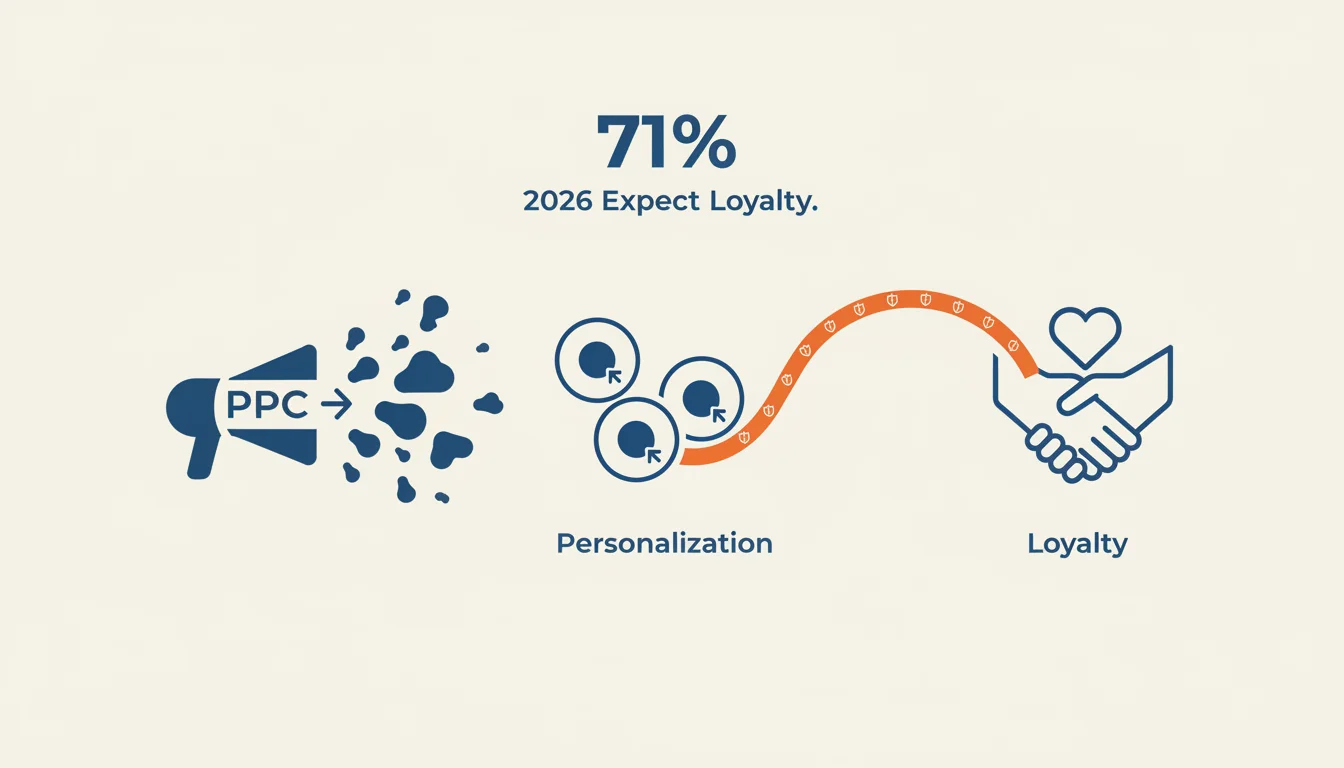
A staggering 71% of consumers expect personalized interactions with brands, according to a 2025 Salesforce report on customer engagement. This isn’t just about addressing them by name. It extends to every touchpoint, including paid advertising. Building brand affinity through PPC personalization is no longer an aspiration but a fundamental requirement for fostering lasting customer loyalty in the competitive digital field.
Key Takeaways
- Advertisers who implement advanced audience segmentation and dynamic ad content can see a 20% increase in conversion rates, according to a 2026 Google Ads study.
- Investing in first-party data collection and activation through Customer Data Platforms (CDPs) can improve return on ad spend (ROAS) by an average of 15% within the first year.
- Real-time bidding strategies that incorporate behavioral signals lead to a 10% higher click-through rate compared to static bidding, based on a recent IAB benchmark analysis.
- Integrating CRM data directly into PPC platforms allows for tailored messaging that can boost customer lifetime value (CLTV) by up to 18% for existing customers.
The 71% Expectation: A Demand for Personalization
That 71% figure from Salesforce, which tracks evolving customer expectations, isn’t just a number. It’s a stark indicator of how much the digital consumer has changed. They’ve grown accustomed to tailored experiences across streaming services, social media feeds, and e-commerce platforms. When their expectation isn’t met in advertising, the disconnect is palpable. We’re talking about more than just showing an ad for a product someone recently viewed. It’s about understanding their stage in the buying journey, their past interactions with your brand, and even their preferred communication style. For instance, a first-time visitor to a luxury apparel site in Atlanta’s Buckhead district should not see the same ad copy or offer as a repeat customer who has made multiple purchases and is part of the loyalty program. The former might respond to an ad highlighting unique craftsmanship and free shipping, while the latter might be swayed by early access to a new collection or a personalized discount on their favorite designer. Ignoring this fundamental shift means your PPC spend is working harder, not smarter, to capture attention that’s already looking for relevance.
Data Point 1: 20% Increase in Conversion Rates with Advanced Segmentation and Dynamic Content
A 2026 Google Ads study highlighted that advertisers employing advanced audience segmentation coupled with dynamic ad content witnessed a 20% increase in conversion rates. This isn’t surprising. Think about it: if you’re running a campaign for a sporting goods retailer, showing a generic ad for “athletic shoes” to everyone is a waste. However, segmenting your audience to target “marathon runners in their 30s interested in sustainability” and then dynamically inserting ad copy that mentions “eco-friendly running shoes with advanced cushioning” and a relevant image, that’s where the magic happens. The Google Ads platform, particularly with its Custom Segments and Responsive Search Ads (RSAs) capabilities, allows for this level of granularity. We’ve seen clients achieve significant gains by moving beyond broad keywords and into intent-based segmentation powered by their first-party data. This means connecting your CRM data, website behavior, and even app usage to inform your ad targeting. It’s about delivering the right message to the right person at the right micro-moment, fostering a sense of understanding from the brand that builds genuine affinity.
| Aspect | Generic PPC (Less Personalized) | PPC Personalization (Advanced) |
|---|---|---|
| Consumer Expectation | Fails to meet 71% expectation | Meets 71% consumer expectation |
| Conversion Rate | Lower conversions | 20% increase with advanced segmentation |
| Return on Ad Spend (ROAS) | Lower ROAS | 15% improvement with first-party data/CDP |
| Click-Through Rate (CTR) | Lower CTR with static bidding | 10% higher with real-time bidding/behavioral signals |
| Customer Lifetime Value (CLTV) | Generic messaging, lower CLTV | Up to 18% boost for existing customers via CRM data |
Data Point 2: 15% Improvement in ROAS from First-Party Data and CDPs
According to eMarketer’s 2025 report on data activation, companies investing in first-party data collection and activating it through Customer Data Platforms (CDPs) like Segment or Tealium saw an average 15% improvement in return on ad spend (ROAS) within the first year. This is where many brands stumble, relying too heavily on third-party cookies that are (rightly) phasing out. Your own customer data, gathered from website visits, purchase history, app interactions, and email engagement, is gold. A CDP acts as the central nervous system for this data, unifying disparate customer profiles into a single, complete view. Once unified, this data can be pushed directly into your Google Ads or Meta Ads accounts. Imagine knowing a customer has browsed your “luxury skincare” category three times in the last week but hasn’t purchased. With CDP integration, you can create a specific audience segment for them and serve a compelling ad for a limited-time offer on a high-end serum, rather than a generic ad for basic moisturizer. This intelligent use of proprietary data makes every ad dollar work harder, demonstrating a brand’s commitment to understanding its customers individually.
Data Point 3: 10% Higher Click-Through Rate with Real-Time Bidding and Behavioral Signals
A recent IAB benchmark analysis revealed that real-time bidding strategies that incorporate behavioral signals lead to a 10% higher click-through rate (CTR) compared to static bidding. This isn’t just about bidding on keywords. It’s about bidding on the user behind the keyword. Modern PPC platforms use machine learning to analyze a multitude of signals in real-time: location, device, time of day, past search history, and even inferred intent based on browsing patterns. If a user in Midtown Atlanta is searching for “Italian restaurants near me” at 6 PM on a Friday, the system can infer a high intent for immediate dining. A restaurant with an active PPC campaign can then bid more aggressively for that specific user, serving an ad that highlights “reservations available now” or “walk-ins welcome.” This dynamic adjustment, informed by immediate behavioral cues, ensures your ad is seen by the most receptive audience at their peak moment of interest. It cultivates a perception that your brand is not just present, but acutely aware of their current needs, which builds incredible goodwill and propensity to click.
Data Point 4: 18% Boost in CLTV by Integrating CRM Data into PPC
HubSpot’s 2025 marketing statistics report indicated that integrating Customer Relationship Management (CRM) data directly into PPC platforms can boost customer lifetime value (CLTV) by up to 18% for existing customers. This is an important point often overlooked by marketers who focus solely on new customer acquisition. Loyalty is built over time, and personalized advertising plays a significant role in nurturing that relationship. When your CRM tells you a customer purchased a specific product six months ago, your PPC campaigns can then target them with relevant complementary products, service reminders, or loyalty program benefits. For example, a customer who bought a high-end coffee machine could receive an ad for specialty coffee bean subscriptions or descaling solutions. This proactive, personalized engagement reminds customers of your brand’s value beyond the initial purchase, reinforcing their decision to choose you. It’s about demonstrating that you remember them and care about their ongoing experience, transforming a transactional relationship into a loyal one. This level of personalized follow-up is what separates fleeting interest from enduring brand affinity.
Challenging the Conventional Wisdom: The “More Data is Always Better” Fallacy
Conventional wisdom in digital marketing often dictates that “more data is always better.” While data is undeniably critical, I’ve found this maxim to be a dangerous oversimplification in the context of PPC personalization. It’s not about the sheer volume of data. It’s about the quality, relevance, and actionable nature of that data. Many organizations collect vast amounts of information but fail to properly structure, clean, or interpret it. They end up with data lakes, not data ponds. A client once presented me with a massive dataset of website interactions, having about its size. Upon closer inspection, much of it was redundant, outdated, or lacked the specific identifiers needed for effective segmentation. They were drowning in data, yet starved for insights. The focus should shift from simply collecting everything to strategically identifying the key data points that genuinely inform personalization. For instance, knowing a user’s purchase frequency is often more valuable than knowing every single page they’ve ever visited, especially when you’re limited by budget and aiming for precise targeting. Prioritizing data that directly impacts segmentation and messaging, rather than hoarding all available information, is the more effective approach. It’s about precision, not just accumulation.
In the end, building strong brand affinity through PPC personalization requires a strategic, data-driven approach that prioritizes the individual customer experience above all else. It means moving beyond generic ad blasts and embracing the power of segmented audiences, dynamic content, and intelligent bidding fueled by strong first-party data.
What is PPC personalization?
PPC personalization involves tailoring paid advertising messages, offers, and targeting to specific audience segments or individual users based on their demographics, behaviors, interests, and past interactions with a brand. This goes beyond basic keyword targeting to create a more relevant and engaging ad experience.
How does first-party data contribute to PPC personalization?
First-party data, collected directly from your customers through your website, app, or CRM, is invaluable for PPC personalization. It provides unique insights into customer behavior and preferences, allowing you to create highly specific audience segments and deliver personalized ad content that resonates deeply, improving relevance and performance.
What role do Customer Data Platforms (CDPs) play in this process?
CDPs are important for PPC personalization because they unify customer data from various sources into a single, complete profile. This consolidated view enables marketers to build precise audience segments, activate that data across different ad platforms, and ensure consistent, personalized messaging throughout the customer journey.
Can personalization increase customer loyalty?
Yes, personalization significantly contributes to customer loyalty. When brands demonstrate an understanding of individual customer needs and preferences through tailored advertising, it encourages a sense of recognition and value. This leads to stronger emotional connections, repeat purchases, and increased customer lifetime value, in the end building lasting brand affinity.
What are some practical steps to start implementing PPC personalization?
Begin by auditing your existing data sources and identifying key customer segments. Implement tracking mechanisms to collect strong first-party data, consider investing in a CDP if you have disparate data sources, and then use platform features like Google Ads’ Custom Segments, audience lists, and Responsive Search Ads to deliver dynamic, targeted ad experiences.


